

Are you interested in learning garment manufacturing technology? Do you want to build a successful career in the global apparel and fashion industry?
If you are planning to join a degree or diploma program in Garment Manufacturing Technology (GMT) or Apparel Production Technology, you might wonder what subjects are actually taught in top fashion and textile institutes.
Leading fashion schools across the globe structure their curriculum to transform students into skilled production managers, industrial engineers, quality heads, and merchandisers. Below is a detailed breakdown of the major subjects covered in a professional Garment Manufacturing Technology course, what you will learn in each module, and how these subjects prepare you for the industry.
What Is Garment Manufacturing Technology (GMT)?
Garment Manufacturing Technology is an applied engineering and management discipline that focuses on the processes, machinery, systems, and strategies used to convert fabric into finished clothing at a commercial scale.
Unlike pure fashion design—which focuses heavily on aesthetics, illustration, and creative concepts—GMT focuses on technical execution, factory operations, efficiency, quality control, and supply chain management. It bridges the gap between creative fashion concepts and large-scale factory production.
Core Subjects Breakdown: What You Will Learn
1. Overview of the Global Fashion Industry
Before diving into technical factory operations, students must understand the structure of the industry they are entering.
- What You Will Learn: The global market flow, major garment exporting countries (such as Bangladesh, India, Vietnam, and China), key importing markets (such as the US and Europe), fast fashion versus luxury segments, and current global trade policies.
- Career Impact: Gives you a macro-level perspective on how fashion brands, buying houses, and manufacturing facilities operate across international borders.
2. Fabric Study: Woven, Knits, and Non-Wovens
Fabric is the primary raw material in garment manufacturing, accounting for 60% to 70% of a garment’s total cost. A deep understanding of textiles is non-negotiable for production professionals.
- What You Will Learn: Differences between woven fabrics (twill, plain, satin), knitted structures (single jersey, rib, interlock), and non-woven materials. You will learn about fiber types, yarn construction, fabric GSM (grams per square meter), fabric defects, shrinkage, and testing parameters.
- Career Impact: Helps you select the right machine needles, stitching tension, and handling methods to prevent fabric damage during cutting and sewing.
3. Apparel Pattern Engineering
Pattern engineering translates a 2D sketch into a 3D garment that fits the human body correctly.
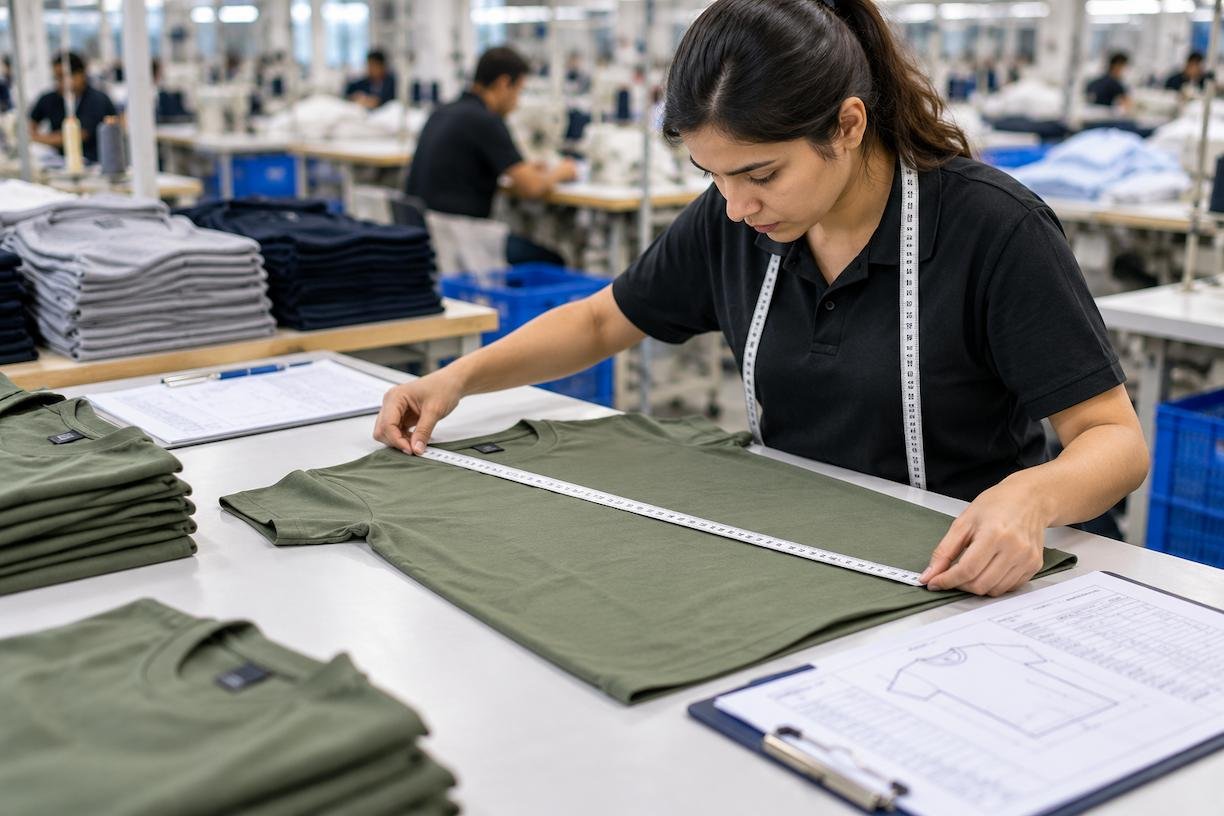
- What You Will Learn: Principles of flat pattern making, body measurements, drafting standard size charts, dart manipulation, adding seam allowances, and pattern grading (scaling patterns up or down for different sizes like S, M, L, XL).
- Career Impact: Essential for Pattern Technicians and Fit Specialists who ensure garments meet buyer measurement specifications before bulk production begins.
4. Advanced Pattern Making & Construction
Once basic pattern engineering is mastered, students learn advanced techniques for complex, structured garments.
- What You Will Learn: Pattern making and construction for tailored outerwear (blazers, suits, jackets), corsetry, stretch wear, and multi-layered garments. You will also learn garment assembly techniques, seam types, and stitch classifications (ASTM standard stitches).
- Career Impact: Prepares you for high-end technical roles where structural accuracy and premium garment fit are critical.
5. Apparel Production Technology
This subject introduces students to the core machinery and equipment used across cutting, sewing, and finishing departments.
- What You Will Learn: Types of industrial sewing machines (single-needle lockstitch, overlock, flatlock, feed-off-the-arm), automated cutters, spreading machines, fusing presses, and garment finishing/steam pressing equipment. You will also study stitch geometry, thread consumption, and machine attachments (folders, guides, binders).
- Career Impact: Provides the technical machinery knowledge required to set up production lines and select appropriate equipment for specific garment styles.
6. Garment Manufacturing Processes
A step-by-step deep dive into the operational workflow inside an apparel factory.
- What You Will Learn: The complete lifecycle of an order—from tech pack analysis, sample development, fabric inspection (using 4-point systems), spreading, cutting, bundling, sewing assembly, inline checking, washing/embellishment, to final packing and auditing.
- Career Impact: Helps you manage floor operations and ensure seamless handoffs between cutting, sewing, and finishing departments.
7. Productivity & Work Study (Industrial Engineering)
Industrial Engineering (IE) is the backbone of operational efficiency in modern garment factories.
- What You Will Learn: Time study techniques, method study, calculating Standard Allowed Minutes (SAM/SMV), line balancing, capacity planning, operator performance rating, pitch diagrams, and identifying bottlenecks on the shop floor.
- Career Impact: Prepares you for roles as Industrial Engineers (IE) or Line Supervisors tasked with lowering garment manufacturing costs and raising daily line output.
8. Apparel Quality Management
Quality failure leads to shipment rejections, heavy financial penalties, and lost clients. This subject focuses on building “quality at the source.”
- What You Will Learn: Acceptable Quality Limit (AQL) sampling plans (AQL 1.5, 2.5, 4.0), Total Quality Management (TQM), 7 QC tools, root cause analysis (5-Why analysis, Fishbone diagrams), inline inspections, pre-final audits, and testing standards for colorfastness and seam strength.
- Career Impact: Essential for Quality Assurance (QA) and Quality Control (QC) Managers responsible for meeting buyer standards.
9. CAD Industrial Design & Web-based PDM
Modern factories have moved from manual drafting to digital systems for pattern development, marker making, and data management.
- What You Will Learn: Computer-Aided Design (CAD) software (such as Lectra, Optitex, or Gerber) for digital pattern drafting, 3D virtual fitting, and automated marker planning to maximize fabric utilization. You will also learn Product Data Management (PDM) and Product Lifecycle Management (PLM) software to store tech packs and bill of materials (BOM).
- Career Impact: Opens doors to CAD operator, digital pattern maker, and 3D sampling specialist roles.
10. Plant Layout & Facility Design
Designing an efficient factory floor layout reduces material handling time, prevents bottlenecks, and ensures worker safety.
- What You Will Learn: Types of plant layouts (progressive bundle system, unit production system, modular manufacturing), workflow optimization, ergonomic workstation design, lighting/ventilation standards, steam and compressed air piping setup, and fire safety regulations.
- Career Impact: Prepares project engineers and factory managers to plan new production facilities or optimize existing layouts.
11. Computer Integrated Manufacturing (CIM) & Real-Time Production Systems
As factories adopt Industry 4.0 principles, digital tracking systems are replacing paper-based reporting.
- What You Will Learn: Real-time shop floor tracking systems (RFID/barcode-based tracking), automated material handling, computerized embroidery and spreading systems, and integration of factory hardware with central enterprise systems.
- Career Impact: Trains you to work in modern, digitized “smart factories” that track hourly production output and operator efficiency digitally.
12. Apparel Technology Management
Focuses on managing technical operations, machine maintenance strategies, and technology upgrades within a factory environment.
- What You Will Learn: Preventive maintenance schedules, downtime reduction, machine repair budget management, spare parts inventory, and evaluating the ROI (Return on Investment) of purchasing new automated machinery.
- Career Impact: Prepares technical leads and maintenance managers to keep machinery running smoothly with minimal production interruptions.
13. Supply Chain Management (SCM)
Garment manufacturing relies on complex global networks involving yarn spinners, fabric mills, trim vendors, wash houses, logistics providers, and retailers.
- What You Will Learn: Raw material sourcing, vendor evaluation, inventory control (Just-In-Time production), lead time management, logistics, customs clearance, and risk management in international supply chains.
- Career Impact: Opens career avenues in sourcing, procurement, and global supply chain logistics.
14. Apparel Marketing & Merchandising
Merchandisers act as the bridge between the buyer (fashion brand) and the factory floor.
- What You Will Learn: Order processing, garment costing (building cost sheets with fabric, trims, CM, overheads, and profit margins), pre-production sampling follow-ups, time and action (T&A) calendar management, and client communication.
- Career Impact: Directly prepares you for roles as Production Merchandisers, Merchant Leads, or Account Managers in garment export houses.
15. Retail Management & Technology
Understanding how garments are sold at the retail level helps production teams align with buyer expectations.
- What You Will Learn: Retail store operations, visual merchandising, e-commerce fulfillment, inventory turnover, point-of-sale (POS) systems, and omnichannel fashion retailing.
- Career Impact: Broadens career prospects into retail buying, brand management, and merchandise planning.
16. Apparel Studies & Appreciation
Understanding garment anatomy and historic fashion evolution helps technical teams communicate effectively with creative design teams.
- What You Will Learn: Garment category classifications (active wear, formal wear, denim, intimate apparel), garment silhouettes, design details (collars, cuffs, pockets, plackets), and historic design references.
- Career Impact: Improves cross-functional communication between technical production teams and creative fashion designers.
17. Organisational Behavior
Garment factories employ hundreds or thousands of workers. Soft skills and human resource management are critical for smooth shop floor operations.
- What You Will Learn: Worker motivation techniques, team management, conflict resolution, leadership styles, communication skills, and understanding workplace psychology.
- Career Impact: Equips floor supervisors and managers with leadership skills to lead large workforce teams effectively.
18. Intellectual Property Rights (IPR)
Protecting designs, brand assets, and proprietary manufacturing innovations is critical in the global apparel trade.
- What You Will Learn: Patents, trademarks, design copyrights, brand protection, preventing counterfeit manufacturing, and understanding non-disclosure agreements (NDAs) with international buyers.
- Career Impact: Essential knowledge for brand managers, factory owners, and product developers handling client designs.
19. Apparel Business Environment & International Business
Garment manufacturing is heavily impacted by international trade agreements, currency fluctuations, and geopolitical policies.
- What You Will Learn: Export-import policies, free trade agreements (FTAs), foreign exchange management, trade tariffs, factory compliance standards (WRAP, BSCI, Sedex), and sustainable business practices.
- Career Impact: Essential for senior management, export directors, and factory owners navigating international markets.
20. Research Methodology & Research Project
During the final terms of the program, students undertake structured research and hands-on factory projects.
- What You Will Learn: Quantitative and qualitative data collection, statistical analysis, problem identification on the shop floor, hypothesis testing, and academic/industry report writing.
- Career Impact: Demonstrates your practical problem-solving capabilities to prospective employers through real-world factory case studies.
Career Options After Studying Garment Manufacturing Technology
Graduating with a degree or diploma in Garment Manufacturing Technology opens up diverse, high-demand job roles across garment export factories, buying houses, fashion brands, and technology firms:
| Job Role | Primary Responsibility |
| Industrial Engineer (IE) | Optimize shop floor layouts, establish SAM, balance sewing lines, and improve daily factory efficiency. |
| Garment Merchandiser | Handle buyer orders, manage Time & Action (T&A) calendars, prepare costings, and coordinate raw material approvals. |
| Production Manager | Lead line supervisors, oversee daily sewing/cutting operations, and ensure production targets are met on time. |
| Quality Assurance (QA) Manager | Implement quality management systems, conduct final audits, and ensure garments meet buyer specifications. |
| CAD / Pattern Technician | Develop digital patterns, execute 3D sample fits, and create optimized markers to minimize fabric waste. |
| Sourcing & Supply Chain Executive | Procure fabrics and trims, audit supplier capability, and manage raw material delivery schedules. |
Summary Checklist for Students
If you are a student considering this course, keep in mind:
- Course Curricula Vary: Subject names and specific module allocations differ from one institute to another. Always check the official website of your target college for their updated curriculum.
- Combine Theory with Factory Exposure: GMT cannot be mastered through textbooks alone. Focus heavily on practical lab sessions (stitching, CAD, time studies) and factory internships.
- Learn the Basics First: If you are a beginner looking to understand fundamental concepts like machine types, SAM calculation, seam formation, and cutting floor operations before starting a degree, reading introductory textbooks on apparel manufacturing processes will give you a major head start.








Leave a Reply