

Author: Dipanwita Ray
A. Southern Region
States: Andhra Pradesh, Karnataka, Kerala, Tamil Nadu, Telangana
1. Bobbili of Andhra Pradesh
• Fabric material – Cotton.
• Craft – Hand-woven.
• Themes – The sarees come in subtle colours and minimal embellishments.
2. Dharamvaram of Andhra Pradesh
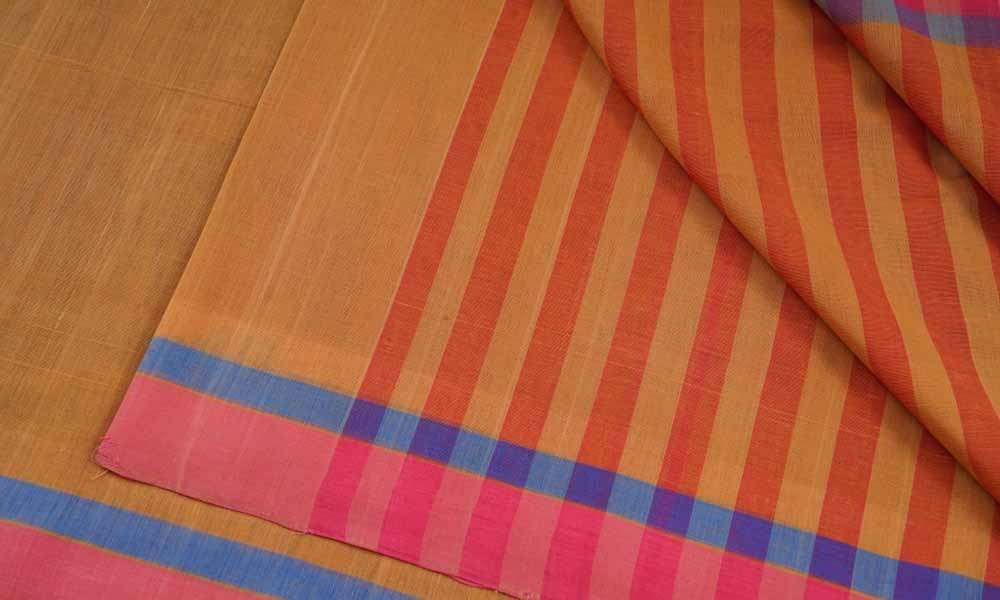
• Fabric material – Silk.
• Craft – Hand-woven with elaborate zari work.
• Themes – The motifs are inspired from temple architectures. They depict emotions of religious and ceremonial celebrations. Peacocks, lotus, elephants, deer, and star design are popular designs.
3. Gadwal of Andhra Pradesh
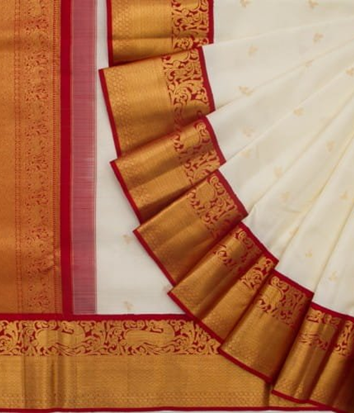
• Fabric material – Cotton or silk body with attached silk/ viscose rayon border and palloo.
• Craft – Hand-woven fine cotton with zari work. The borders attached by back-breaking or interlock weft technique (called ‘kuttu’).
• Themes – The brocaded designs represent south Indian cultural patterns. These include peacock, rudraksha rule, temple motif, mango butti.
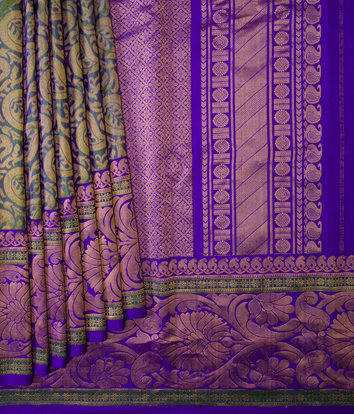
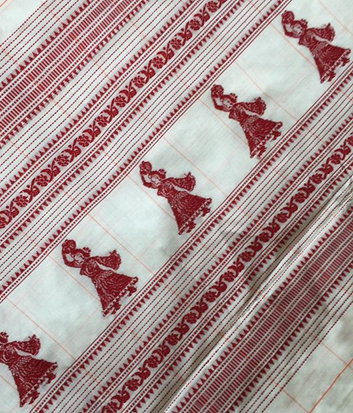
4. Gollabhama from Telangana
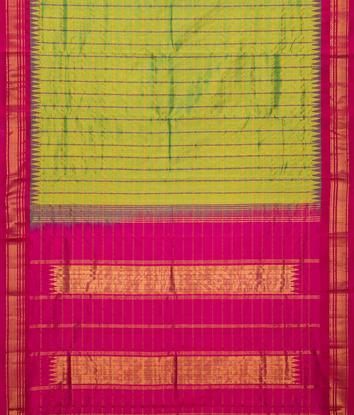
• Fabric material – Cotton.
• Craft – Hand-woven.
• Themes – Intricate motifs of ‘gollabhama’ or milk maids are woven in the saree.
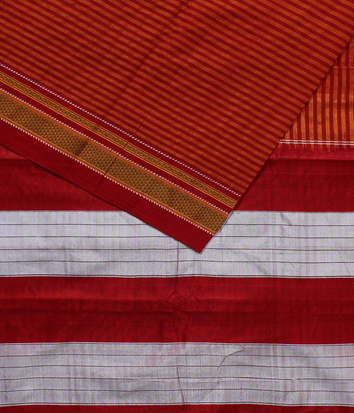
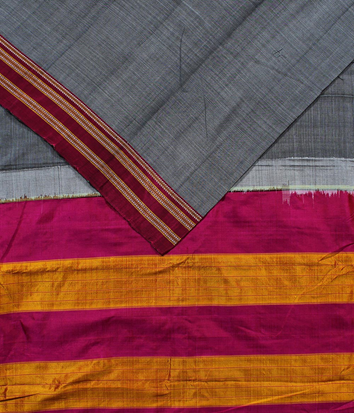
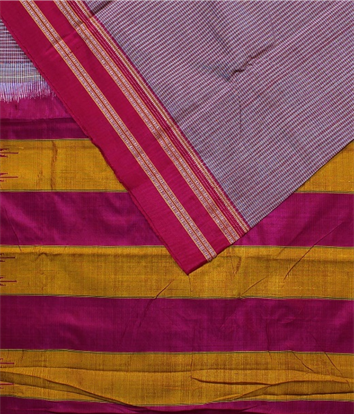
5. Ilkal of Karnataka
• Fabric material – Cotton, silk.
• Craft – Woven with a unique weaving and knotting technique (topi teni) between the warp threads of the saree body and the saree palloo. Both of which are woven separately on different looms.
• Themes – Body of the saree is plain, striped, or chequered. The border designs are called Chikki paras (dots or stars), Gomi dadi (arrowheads), and Gayathri (multiple layers of design).
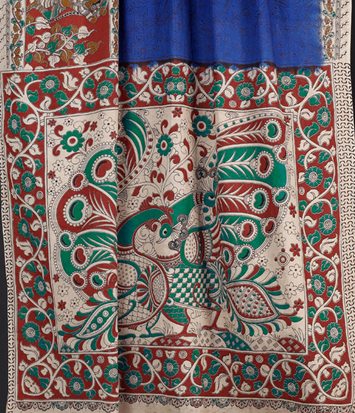
6. Kalamkari of Andhra Pradesh
• Fabric material – Cotton, silk, jute.
• Craft – Hand-painting on fabric using a ‘kalam’ or pen with natural dyes.
• Themes – Popular motifs drawn in Kalamkari are flowers, birds like peacocks, animals like horses and elephants, and divine characters of Hindu mythology.
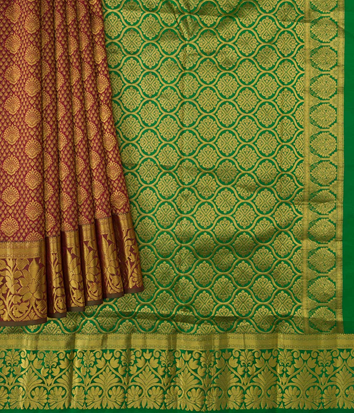
7. Kanchipuram/ Kanjivaram of Tamil Nadu
• Fabric material – Silk.
• Craft – The weaving method uses three shuttles. The border, palloo and body of the saree are woven separately and later interlocked by weft weaving technique known as Korvai. In the Petni Technique, the palloo is woven in a different colour that requires changes in warp.
• Themes – Zari patterns and motifs with silver and gold thread. Designs woven include stripes, gold dots, temple borders, checks, floral, sun, moon, chariots, peacocks, parrots, swans, lions, coins, mangoes, leaves.
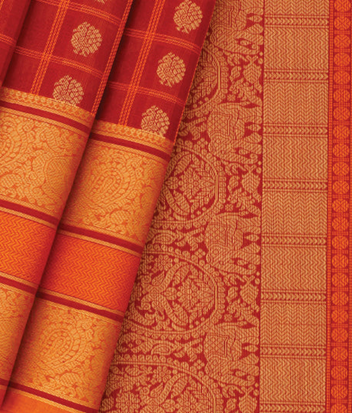
8. Kandangi of Tamil Nadu
• Fabric material – Cotton, silk.
• Craft – Hand-woven. A special needle frame or pannai is designed by artisans in Nelakotta using handpicked and spliced bamboo sticks.
• Themes – It features strikingly contrast colour combinations and big borders. The design language incorporates clean lines and symmetry inspired by the local architecture as well as intricate flora, fauna and mythological beings.
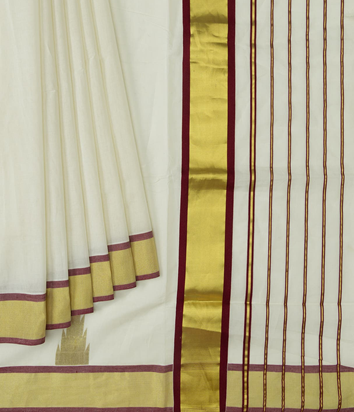
9. Kasavu of Kerala
• Fabric material – Cotton, silk.
• Craft – Hand-woven.
• Themes – The term ‘kasavu’ refers to the gold thread (zari) used in the border (‘Kasvi’ is Sanskrit for shining gold). These sarees are very minimalistic and the only design element is the border. However, there are variations with buttis of ovals, leaf, diamond, peacock, flower motifs and temple borders.
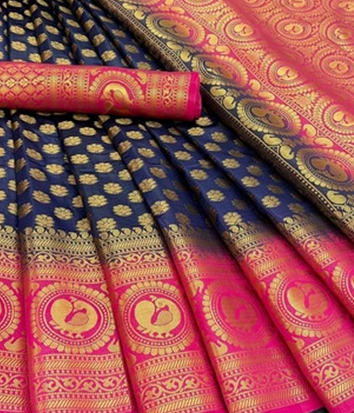
10. Konrad (also called Mubbagham or Temple saree) of Tamil Nadu
• Fabric material – Silk.
• Craft – Interlock weft-woven saree that has its two borders of equal widths.
• Themes – The designed borders are made with beautiful motifs of animals, birds, flowers and vines.
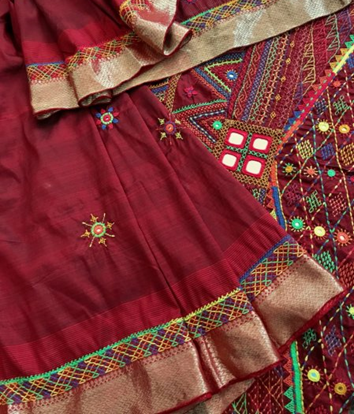
11. Lambani of Karnataka
• Fabric material – Cotton.
• Craft – Lambani/ Kasuti embroidery by the Lambani/ Banjara tribe. It uses 14 types of stitches.
• Themes – The embroidery follow geometric shapes like squares, circles, triangles, rectangles, diamond, diagonal and parallel lines. Stitches are done with contrasting coloured threads and decorated with shells, coins, mirrors, and beads.
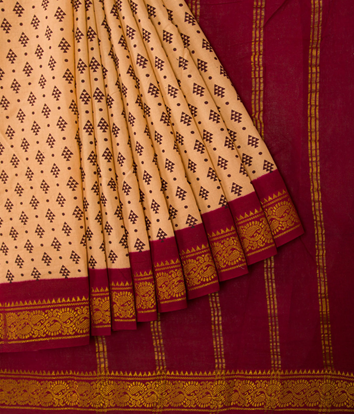
12. Madurai sungudi of Tamil Nadu
• Fabric material – Cotton.
• Craft – Tie-dye and weaving. The name of the weave ‘Sungudi’ is derived from the Sanskrit word sunnam meaning ‘round’.
• Themes – The borders and end-pieces are usually a different colour than the body of the saree. A zari pattern with complementary warp threads is often used in the borders.
13. Malkha of Andhra Pradesh
• Fabric material – Cotton.
• Craft – Hand-woven and naturally dyed.
• Themes – Minimalistic borders and plain body.
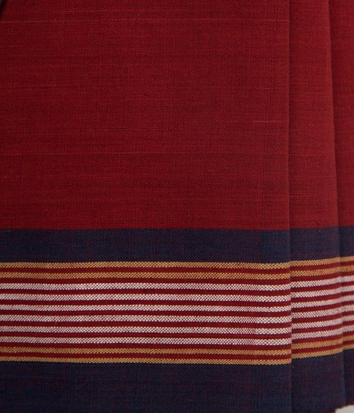
14. Mangalgiri of Andhra Pradesh
• Fabric material – Cotton, silk, cotton-silk blend.
• Craft – Hand-woven in a manner exerting force during the weaving process to create a weave without gaps.
• Themes – Minimalistic or no motifs on the body with intricate zari on the border and palloo.
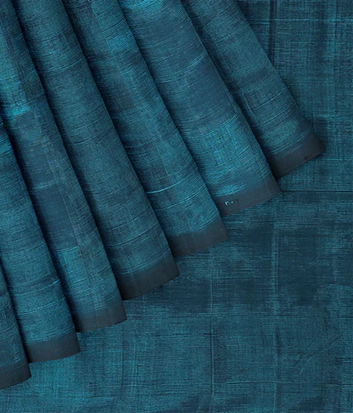
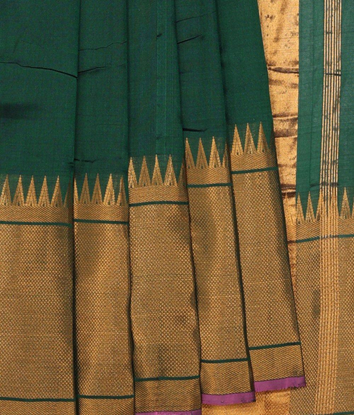
15. Narayanpet of Telangana
• Fabric material – Silk.
• Craft – Hand-woven wherein eight sarees are made at one go on a loom. Vegetable dyes are used for colouration.
• Themes – The body has a checked surface design with embroidery. The border or palloo have intricate ethnic designs such as a temple.
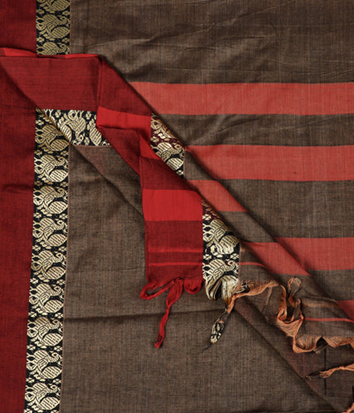
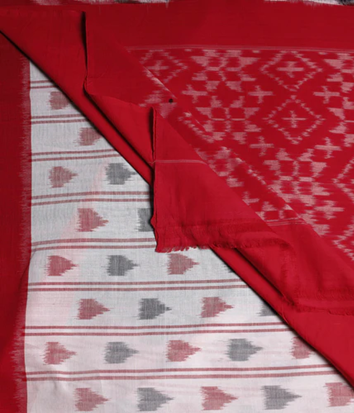
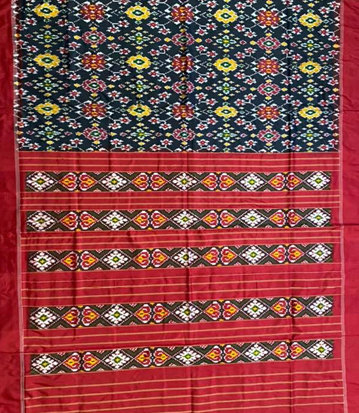
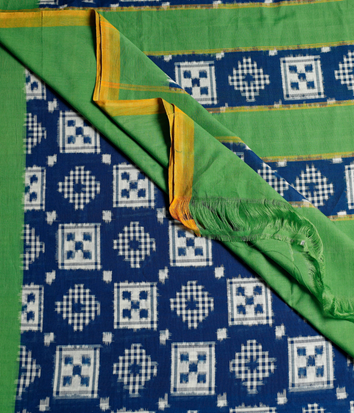
16. Pochampally Ikat of Telangana
• Fabric material – Cotton, silk, cotton-silk blends.
• Craft – Tie-dye and hand-woven. In single ikat either warp or weft is tie-dyed, where as in double ikat both warp and weft are tie dyed.
• Themes – The designs represent forms of squares, diamonds, dots, stripes, birds, flowers and checks.
17. Ponduru khadi of Andhra Pradesh
• Fabric material – Cotton.
• Craft – Hand-woven using yarn made of red and white cotton spun on single spindle charkha.
• Themes – Sarees are of earthy colours and contrast borders that are attached using the extra shuttle attachment technique (called ‘kuppadam’)
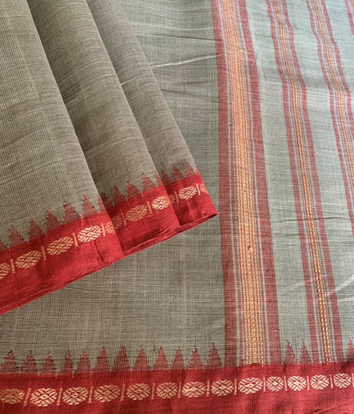
18. Udupi cotton of Karnataka
• Fabric material – Cotton.
• Craft – Hand-woven in Malabar frame looms.
• Themes – Sarees range from plain with solid border to striped or chequered to all over buttas and golden thread work.
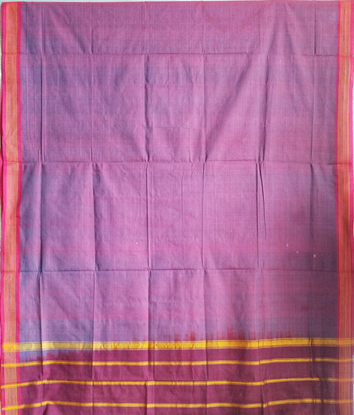
19. Uppada of Andhra Pradesh
• Craft – Hand-woven by the Jamdani method such that designs are visible from both sides of the fabric.
• Themes – The saree fabric is almost translucent. Intricate designs are woven by zari work, which comprises ornamental flowers, peacock and curvilinear motifs.
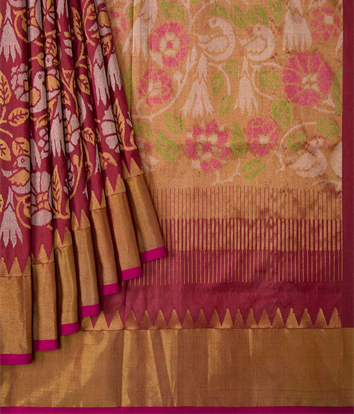
20. Venkatagiri of Andhra Pradesh
• Fabric material – Cotton, silk.
• Craft – Fine muslins, traditionally woven in an unbleached cotton.
• Themes – Traditional motifs like dots, coins, leaves, mangoes, lotuses, peacocks, parrots and simple geometrical patterns are woven in the body using extra-weft technique. The borders are broad with elaborate patterns. Motifs are repeated in the palloo between the gold bands (known as variakanchu).
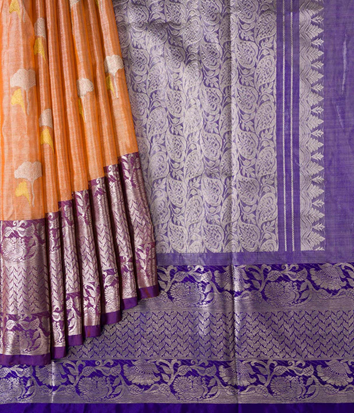
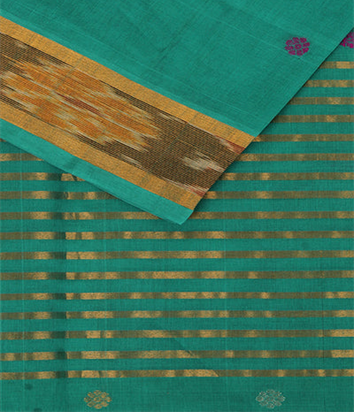
B. Eastern India
States: Bihar, Jharkhand, Odisha, Sikkim, West Bengal
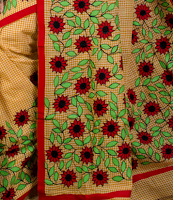
21. Applique of West Bengal
Fabric material – Cotton khesh, cotton-silk blend
Craft – Applique work is done on handwoven sarees
Themes – The applique motifs inspired by nature commonly depict flowers, leaves, fish, butterflies, and birds. The patches also include geometrical shapes such as squares, triangles, and circles. Some motifs are based on festivals like Durga puja, Diwali, and musical traditions like Baul.
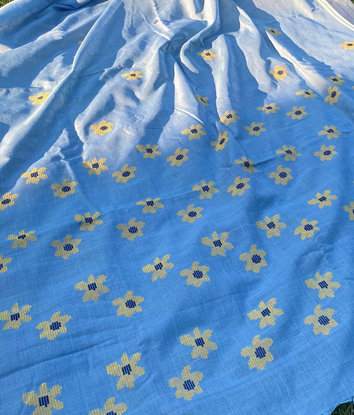
22. Baavanbuti of Bihar
• Fabric material – Cotton, silk.
• Craft – Hand-woven using extra weft to create the motifs
• Themes – The saree is named after the fifty-two motifs, or baavan buti, running through their main body. Motifs include Buddhist iconographies such as the peepal, the bull, the lotus, the stupa, the deer and the elephant.
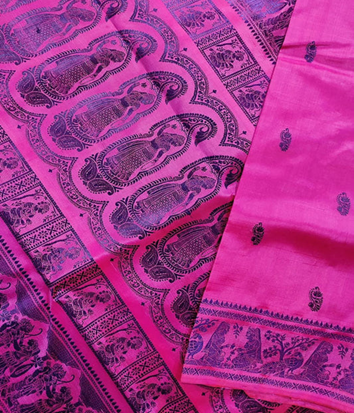
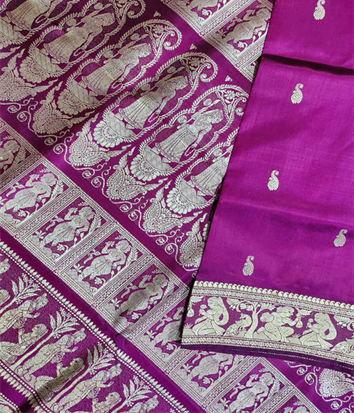
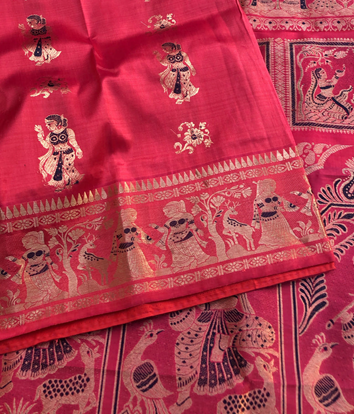
23. Baluchari of West Bengal
• Fabric material – Silk.
• Craft – Hand-woven with meticulously planned arrangement of warp and wefts to depict minute details.
• Themes – Elaborate motifs are woven on the border and palloo that depict scenes from religious epics and courtly ceremonies. There are three types of baluchari based on the thread used in weaving the motifs.
i. Resham baluchari: resham threads in a single colour
ii. Swarnachuri baluchari: gold or silver coloured threads (often with meenakari work in another colour)
iii. Meenakari baluchari: threads in two or more colours with meenakari work
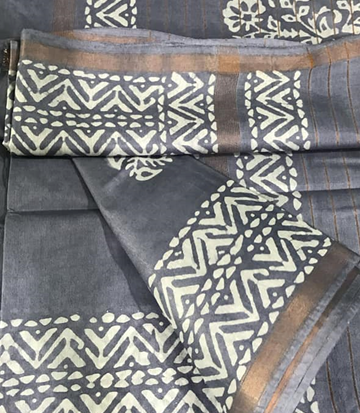
24. Batik of West Bengal
• Fabric material – Cotton, silk, cotton-silk blend.
• Craft – A resist-dyeing technique, where in designs are made of wax with a spouted tool called a canting, or by printing the resist with a copper stamp called a cap. The cloth is then dyed and wax is removed with boiling water.
• Themes – Patterns include traditionally inspired motifs representing folk scenes and deities, nature elements such as birds, flowers, bees, leaves, and complex geometrical designs on a variety of colours.
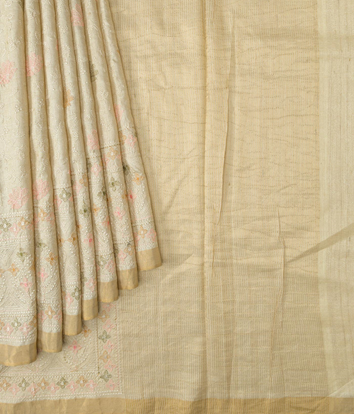
25. Bhagalpuri of Bihar
• Fabric material – Silk (Bhagalpuri silk or Tussar silk).
• Craft – Hand-woven.
• Themes – The mellow golden hued appearance is its characteristic feature. Symbolic motifs are woven, embroidered, or printed all over the saree.
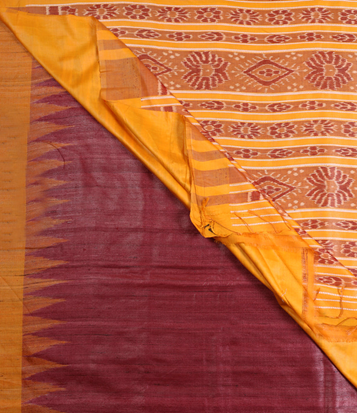
26. Bomkai/ Sonepuri of Odisha
• Fabric material – Cotton, silk.
• Craft – Hand-woven using both weft and warp techniques. The palloo is developed using extra-weft and the tie-dyed warp is processed for the borders.
• Themes – The palloo has intricate threadwork, with temple spire patterns (Ikat tie-dye) on the border. The designs are inspired from nature and tribal art. These include karela (bitter gourd), the atasi flower, the kanthi phul (small flower), macchi (fly), rui macchi (carp-fish), koincha (tortoise), padma (lotus), mayura (peacock), and charai (bird)
27. Dolabedi of Odisha
• Fabric material – Silk.
• Craft – Hand-woven using extra-weft technique.
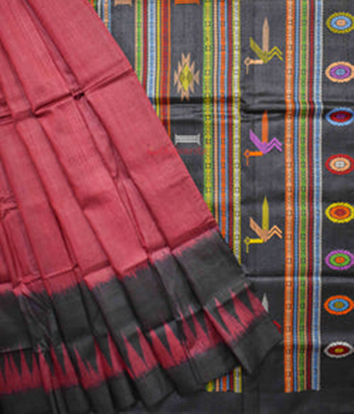
• Themes – The patterns represent the vibrancy of the festival ‘Dola purnima’ or ‘Holi’. The motifs have deep symbolism, based on the ‘Dola utsav’ and inspired from nature. For e.g. the palloo has designs of turtles, parrots and Dola (chariots).
28. Dongria of Odisha
• Fabric material – Coarse organic cotton.
• Craft – Hand-woven by Dongria Kondh tribe.
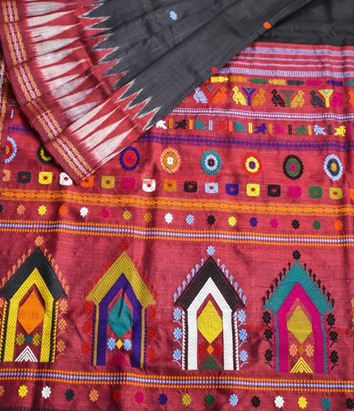
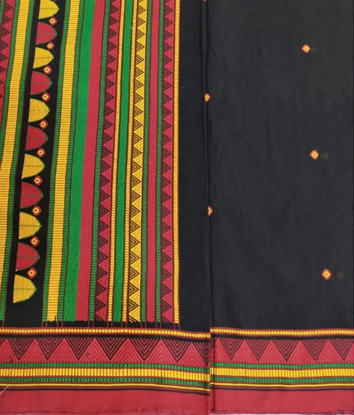
• Themes – Triangular and temple motifs are woven in the border and palloo. Triangles represent Niyamgiri Hills- the home of the primitive tribal group of Dongria Kondh.
29. Garad of West Bengal
• Fabric material – Silk.
• Craft – Hand-woven in a close weave to give a fine texture.
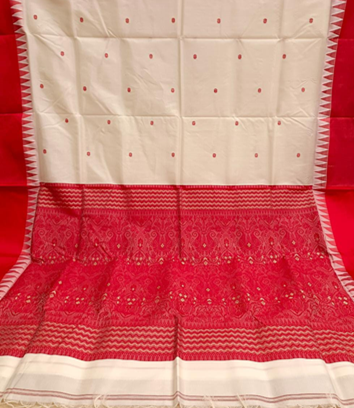
• Themes – The saree is characterised by a plain red border on a white or off-white silk body. Small floral or paisley motifs may be woven along the border or in the body of the saree.
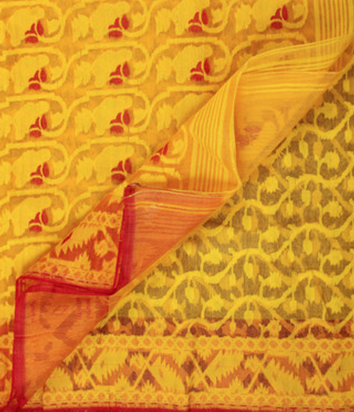
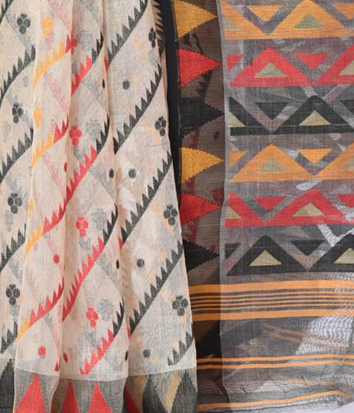
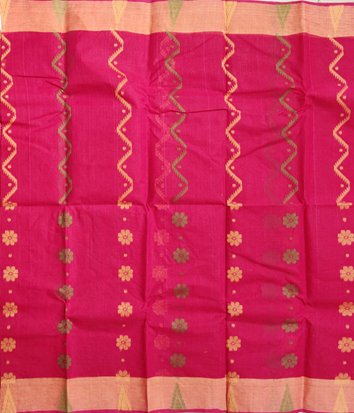
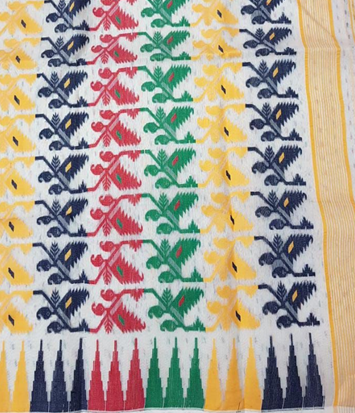
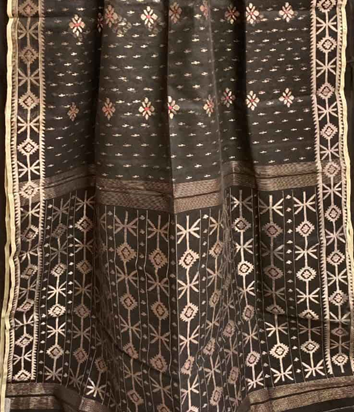
30. Jamdani of West Bengal
• Fabric material – Cotton.
• Craft – Hand-woven a discontinuous weft technique. Jamdani weaving is touted as the most advanced hand weaving technique in the world.
• Themes – Geometric patterns and floral designs in colourful hues are woven in patterns such as “butidar” (dispersed motif on body), the “tercha” (diagonally striped florals), or “jhalar” (a network of floral motifs).
• Varieties – Based on the jamdani weave, the varieties are:
i. Shantipur jamdani: soft texture/ weave
ii. Dhaniakhali jamdani: tighter weave, bright hues with dark border
iii. Tangail jamdani: traditional border, minimal design
iv. Dhakai jamdani: colourful motifs, elaborate designs, semi-stiff weave
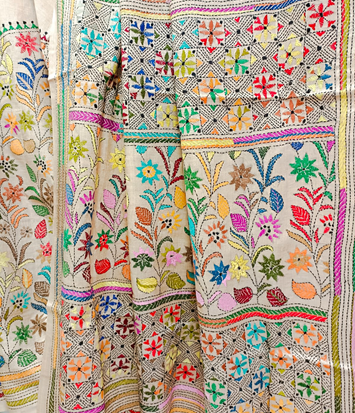
31. Kantha of West Bengal
• Fabric material – Cotton, silk.
• Craft – Embroidery with running stitches.
• Themes – The motifs illustrate Hindu myths and rituals, scenes from everyday life, archaic figures of humans, animals and birds.
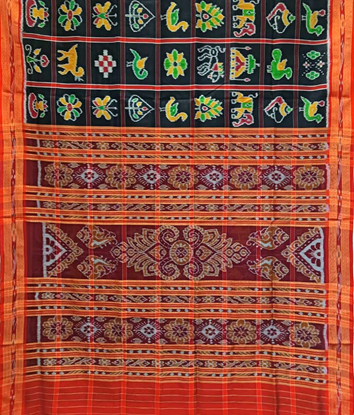
32. Khandua (also called Kataki or Maniabandi) of Odisha
• Fabric material – Silk.
• Craft – Tie-dye Ikat and hand-woven.
• Themes – The sarees have a glossy appearance with temple borders and consists of vibrant designs inspired by nature. The common motifs include star, temple, conch, rudrakshya, fish, chakra, lotus, swan, peacock, parrot, deer, elephant, horse, lion etc.
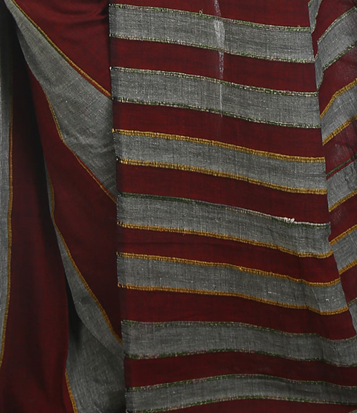
33. Khesh of West Bengal
• Fabric material – Cotton.
• Craft – Hand-woven using thin strips cut from old sarees as weft.
• Themes – The variation in the colour of the weft yarn along the saree gives it a unique visual effect.
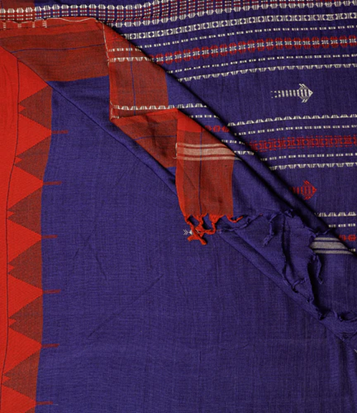
34. Kotpad of Odisha
• Fabric material – Organic cotton.
• Craft – Hand-woven by the Mirgan community tribe. It is unbleached and naturally dyed. Interestingly, five shades of red and coffee colour can be made from the same dye source. Ash from kitchen and cow dung is used for preparation of the yarns which gives it a unique smell.
• Themes – Distinctive motifs of fish, birds, cow, flowers are woven in the saree. A vibrant red dyed border with temple design is common.
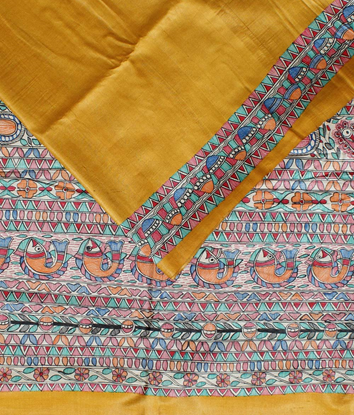
35. Madhubani of Bihar
• Fabric material – Cotton, silk, cotton-silk blends.
• Craft – Hand-painting characterized by line drawings and tribal motifs accompanied with bright earthy tones and contrasting patterns.
• Themes – The themes of Madhubani paintings usually revolve around scenes from the royal court, social events like weddings, festivals and even the picturesque landscape of the place.
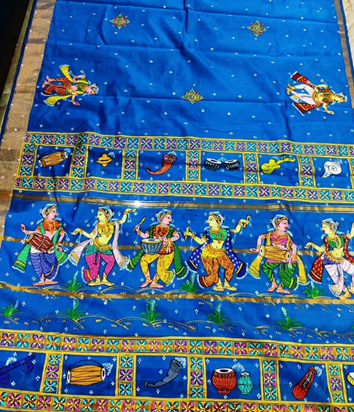
36. Pattachitra painted of Odisha
• Fabric material – Cotton, silk, cotton-silk blend.
• Craft – Hand-painted using natural dyes derived from fruits and vegetables.
• Themes – The paintings depict mythological characters and stories, religious stories and folklore. Some of the popular themes are Radha-Krishna, Mahabharat, Ramayana, Lord Jagannath, Dasavatar, etc. Floral borders are drawn around the painting.
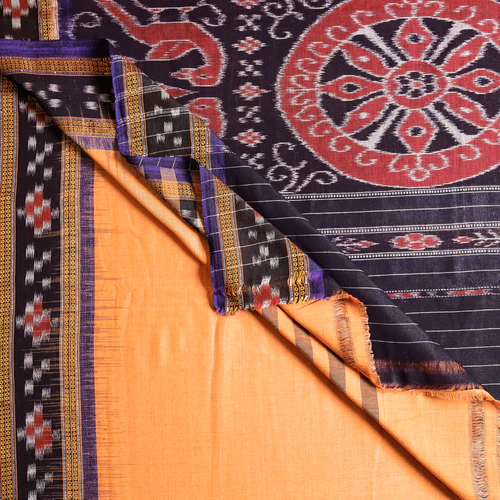
37. Sambalpuri and Berhampuri Ikat of Odisha
• Fabric material – Cotton, silk.
• Craft – Ikat tie-dye and hand-woven.
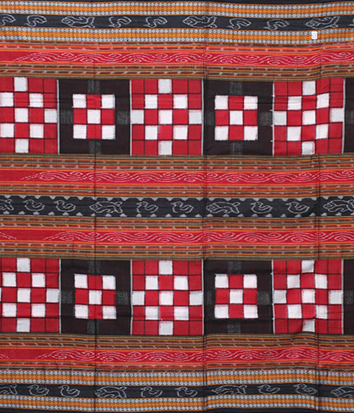
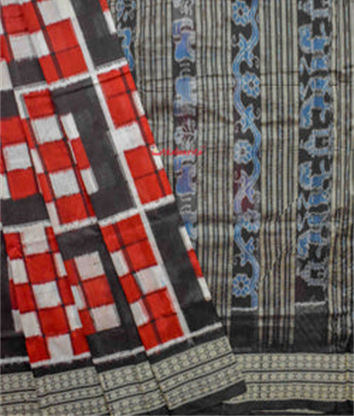
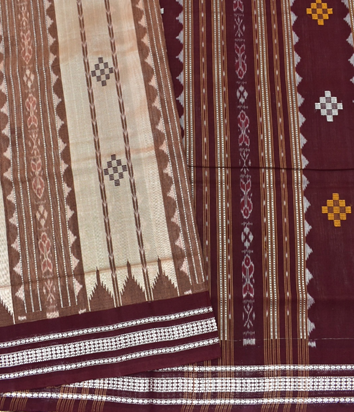
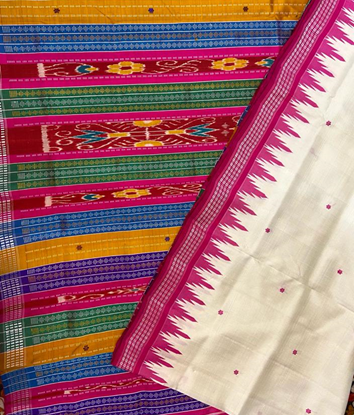
• Themes – Sambalpuri Ikats are double ikats and can be recognised by hazy borders and circular, feather-like patterns which are achieved through several dye baths. Motifs of shankha (shell), chakra (wheel), phula (flower), rudraksha, birds and temple spires are incorporated. Berhampuri Pata are heavy silk sarees with narrow borders, generally woven without any intricate motifs. The traditional temple pattern is called the ‘phoda Kumbha”.
• Varieties – Based on the design, the range of sambalpuri ikat saress include Pasapalli, Bichitrapuri, Bapta.
ii. Bichitrapuri: a band of ikat work lines are sandwiched between two big chequered blocks of pasapalli
iii. Bapta: combination of cotton and silk with use of golden threads
38. Santali Phuta of Odisha
• Fabric material – Cotton.
• Craft – Hand-woven by the Santal people.
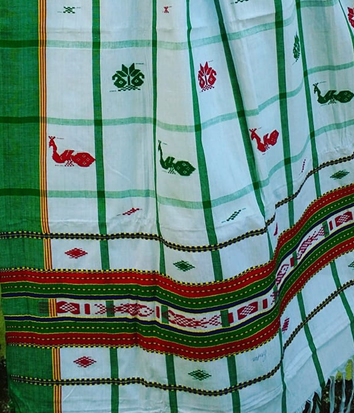
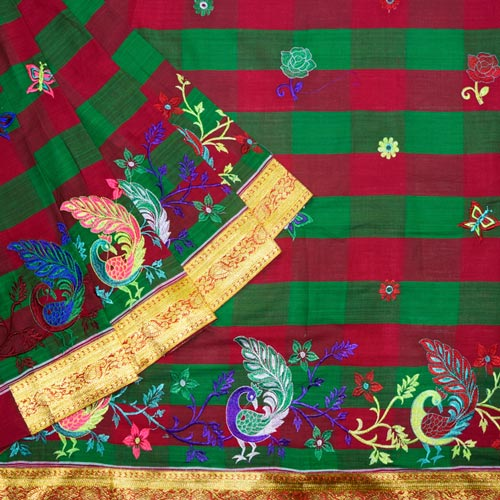
• Themes – The distinctive design is the checks on the body and stripes on the palloo. The motifs are inspired by the surrounding nature. In the phuta kacha, the motifs are woven in a vertically symmetric pattern such that it can be worn in both the ways. The stripes are narrow in width. The jhala saree is asymmetric with heavily embellished floral motifs and grids on the palloo. The stripes are broader than that in phuta kacha.
39. Suta Luga of Odisha
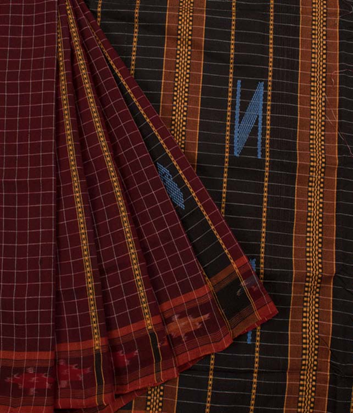
• Fabric material – Cotton.
• Craft – Hand-woven using single cotton or non-mercerized cotton.
• Themes – The body is chequered with ikat motifs on the border and palloo.
40. Tant of West Bengal
• Fabric material – Cotton.
• Craft – Hand-woven.
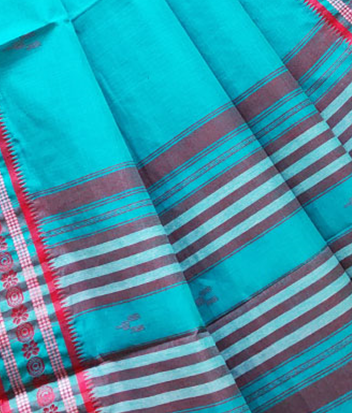
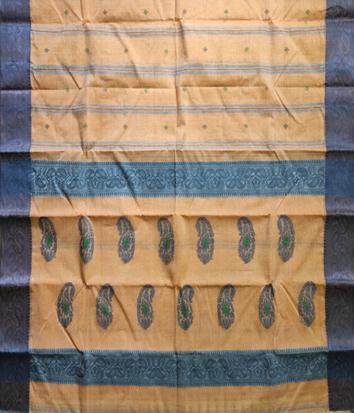
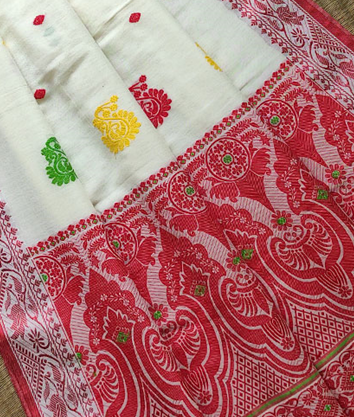
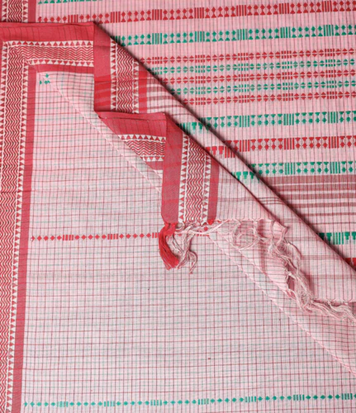
• Themes – The woven borders have elaborate traditional designs such as Anspar (fish scales), Rajmahal (big and small diamonds), Benkiterch (zig-zag lines), Chandmala (circular motifs), Bhomra (honeycomb pattern), Nilambari (indigo coloured), Ganga-Jamuna (multi-coloured), Brindabani mor (peacocks), Kalka (paisley), flowers, human figures, checks and stripes.
• Varieties –
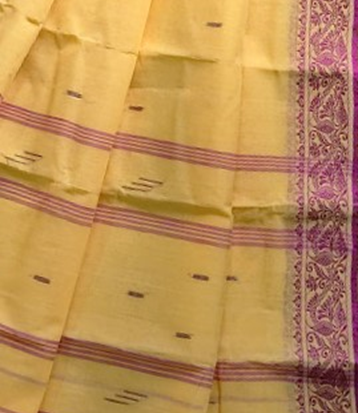
i. Shantipuri: Loom-embroidered sheer textiles with intricate motifs and colourful palloos. The border is of a contrasting colour and palloo is made of alternating thick and thin stripes along with fine Jalchuri lines adjoining them at the border.
ii. Dhonekhali: Sarees are in pastel shades with minimal motifs and mostly featuring striped patterns/ ‘khejur chori’ lines.
iii. Tangail: The borders/ edge are made using silky and shiny threads. These sarees are known for spaced out motifs and dotted designs.
iv. Fulia: These sarees have intricate designs and vibrant colours.
v. Begumpuri: Characterised by loosely woven coarse structure with a smooth feel, these sarees come in deep, bright colours.
C. North-Eastern India
States: Arunachal Pradesh, Assam, Manipur, Meghalaya, Mizoram, Nagaland, Tripura
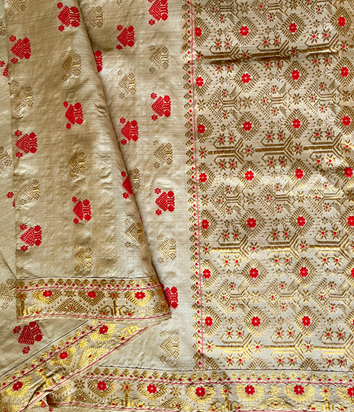
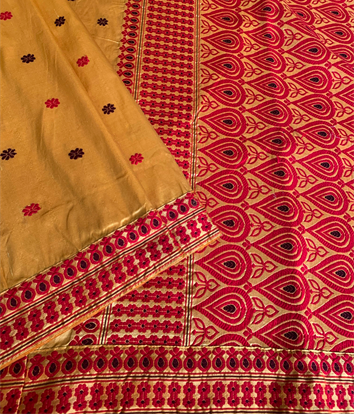
41. Assam silk of Assam
• Fabric material – Muga silk, mulberry silk.
• Craft – Hand-woven.
• Themes – Borders are woven as strips, cut, and then stitched.
42. Gari diya of Assam
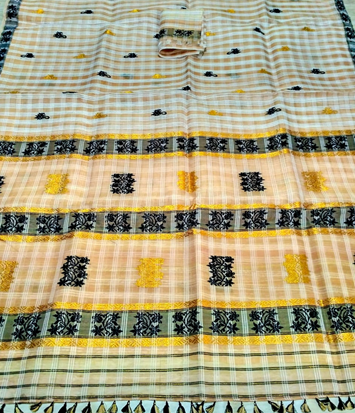
• Fabric material – Cotton and silk.
• Craft – Cross-weave of silk and cotton with missing checks.
• Themes – The concept of missing weave is to create a negative space by removing intermittent warp and weft yarns. This gives the saree an airy and fluffy feel. The patter is typically checks with traditional motifs like gaach (tree), kingkhap woven with extra-weft.
43. Mishing work of Assam
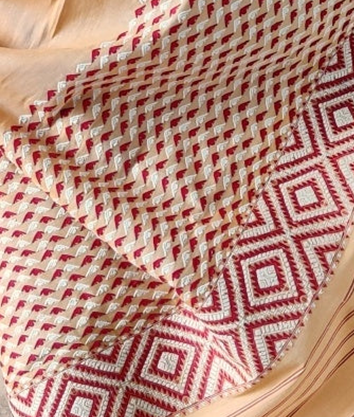
• Fabric material – Cotton.
• Craft – Hand-woven by Mishing tribe.
• Themes – The weavers draw inspiration from their conscious lifestyle and oneness with nature. Flowers, birds, diamonds, geometric patterns, stripes are woven in the saree.
44. Moirang Phee of Manipur
• Fabric material – Cotton silk.
• Craft – Hand-woven by Meitei clans.
• Themes – Intricate extra weft motifs and the distinct temple border designs. The graduating canine tooth-like structures along the border are called Yarongphi.
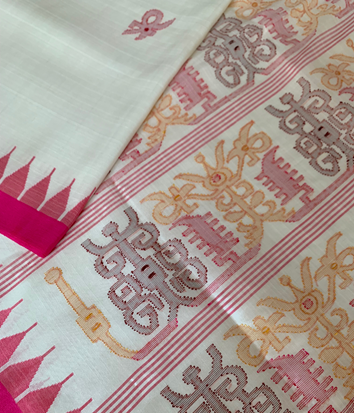
45. Sarees inspired by traditional weaves of Arunachal Pradesh, Meghalaya, Mizoram, Nagaland and Tripura.
• Fabric material – Silk, silk-cotton blend.
• Themes – Motifs and design elements are borrowed from the Mushaiks of Arunachal Pradesh, Dhara/Jainsen and Eking of Meghalaya, Mizo Puan of Mizoram, Naga shawls of Nagaland, Rinai Risa of Tripura.
References:
https://www.nationalgeographic.com/travel/article/the-story-of-the-sari-in-india
*Regions are as per- https://www.mapsofindia.com/zonal/
Image source:
https://bunavat.com/
https://balaramsaha.com/
https://www.itokri.com/
https://www.nalli.com/
https://www.omnah.in/






Comments (2)
P Testsays:
August 12, 2026 at 4:45 pmA great collection of India Sarees.
Prasanta Sarkarsays:
August 13, 2026 at 6:03 amThanks for visiting ou website and reading this article.