


Today’s fashion consumers demand quality, durability, and performance. For emerging apparel brands looking to build lasting customer loyalty, implementing strong and consistent garment quality control (QC) is paramount.
This guide on garment quality control for apparel brands provides a clear overview of the essential QC processes in the fashion industry and demonstrates how establishing the right systems can set your brand on a path to sustainable, long-term success.
Why Quality Control is Non-Negotiable for Your Fashion Business:
Detailed quality control practices ensure your garments consistently meet high standards, offering crucial benefits:
- Happy Customers, Loyal Following: High-quality, defect-free apparel fosters customer satisfaction and builds enduring brand trust.
- Smart Cost Management: Early detection of defects minimizes waste, rework, and the risk of expensive recalls.
- Regulatory Compliance: While not a standalone solution, QC is vital for meeting safety, labeling, and quality regulations, helping you avoid penalties and delays.
Effective quality control procedures are tailored to your specific products, target audience, and business objectives.
The 3 Key Areas of Apparel Quality Control:
Apparel QC is typically structured around three core components:
1. Foundation: Documentation & Clear Standards
Establishing clear quality expectations before production is crucial. To develop quality standards for the apparel products you source, involve experts from your team or hire someone who can develop good quality manual. This includes:
- Product Specifications: Detailed outlines of garment measurements, materials, and features. In the apparel product tech pack provide product specification and construction details as much a possible.
- Quality Checklists: Inspection criteria sheets defining what to look for during QC checks.
- Standard Operating Procedures (SOPs): Step-by-step instructions for executing QC tasks. This is important part of the quality control process because it helps quality inspections and quality auditors to follow the standard method while performing quality audit.
- Supplier Audits: Assessments of factory conditions, capacity, and ethical/environmental compliance.
These documents provide a clear framework for production and quality assurance.
2. Execution: Implementing Inspection Protocols
Inspections involve hands-on garment reviews at various production stages to identify visible issues and verify adherence to specifications. Key inspection points include:
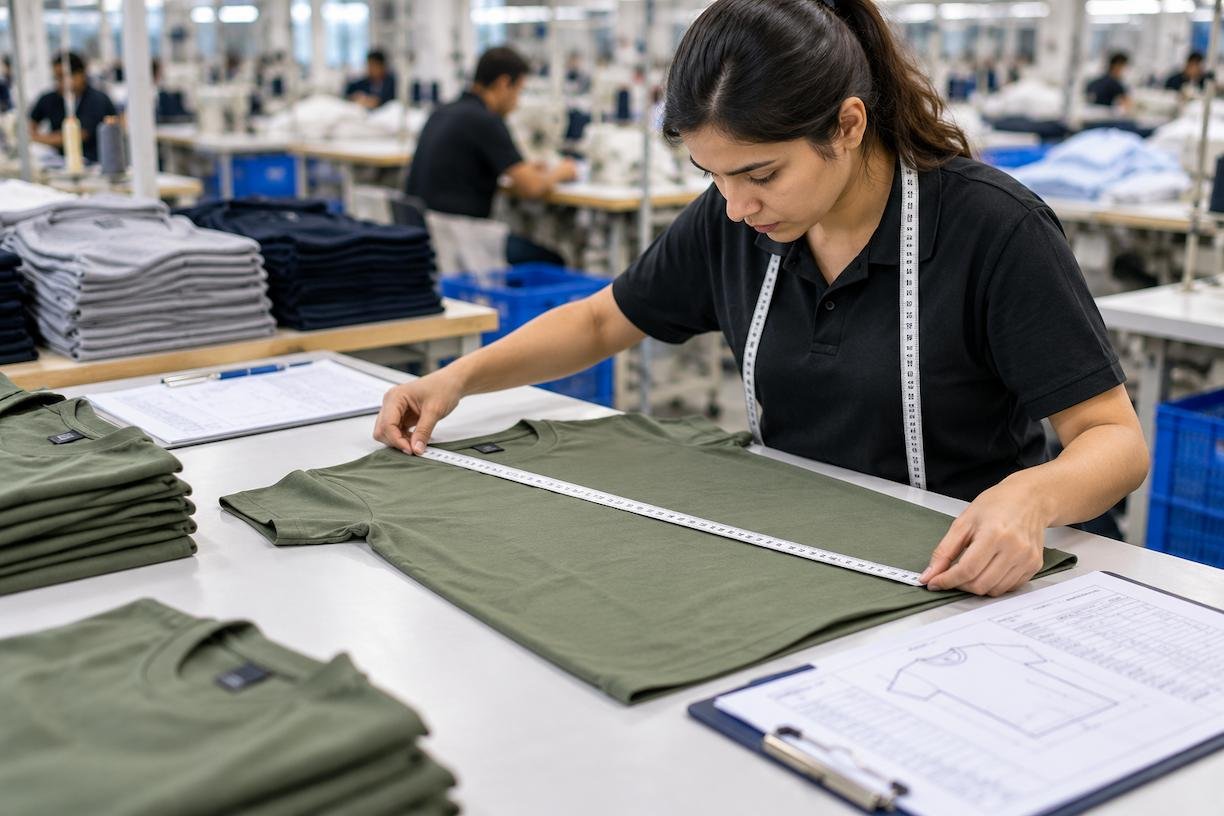
- Garment Measurements: Ensuring dimensions of the garment measurement are within acceptable tolerances. Follow the approved spec sheet while doing product quality inspections.
- Accessories: Testing the strength and durability of components like zippers and buttons.
- Visual Quality: Checking color accuracy, logo placement, stitching, and overall appearance, including odor and needle detection.
- Labeling: Verifying the accuracy of care instructions, fiber content, and country of origin. Always follow the standard approved by brands technical team.
- Packaging: Inspecting unit counts, packaging quality, barcode placement, and shipping marks.
Inspections often utilize sampling methods like AQL (Acceptable Quality Limit) to define acceptable defect levels.
3. Validation: The Importance of Testing
Beyond visual checks, testing evaluates garment performance under specific conditions, often in a lab. Consider getting your product performance testing done through the well-known consumer testing labs like SGS, QIMA. Key testing categories include:
- Chemical Testing: Ensuring fabric safety by checking for harmful substances, pH levels, and flame retardancy.
- Physical Testing: Measuring material strength and durability through tests like tear, pill, and abrasion resistance.
- Performance Testing: Assessing functional aspects like shrinkage, seam strength, water resistance, and thermal insulation.
These tests provide objective data on how garments will perform in real-world use. Use the product specific tests for each product categories.
Conclusion
Strong garment quality control systems are essential for all fashion brands aiming for success. By integrating thorough documentation, rigorous inspections, and comprehensive testing, you can deliver reliable, high-quality garments that meet customer expectations and regulatory requirements. As a brand you must develop product quality manual for the supplier to follow, quality protocols testing labs and supplier can follow.
Investing in garment quality control and quality management now lays a solid foundation for your brand’s long-term growth and reputation.








Comments (2)
slot gacorsays:
August 22, 2026 at 12:29 pmvery informative articles or reviews at this time.
dewatogelsays:
August 22, 2026 at 1:29 pmGood post! We will be linking to this particularly great post on our site. Keep up the great writing