

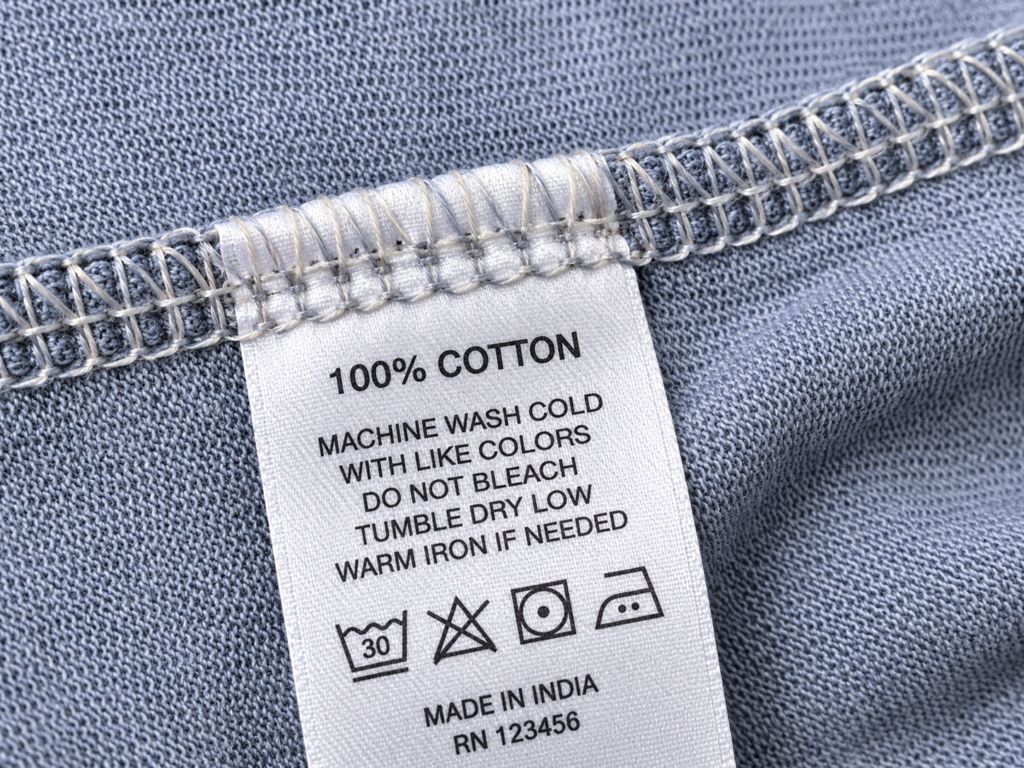
Recently, I bought a couple of knit t-shirts and shorts for my kid from a well-known brand. While checking them over, I noticed that the care and content labels were stitched directly into the side seam and back rise using the main overlock stitch. I looked through the other t-shirts I bought, and the story was the same across all of them.
Years ago, we used to follow this exact same practice when stitching export knitwear. The goal was simple: reduce operation time. Attaching a label in a separate step required an extra machine and extra manpower. However, there was always a better industry practice—attaching the label separately with a run stitch in the side seam after overlocking. That way, if someone pulls on the label, the side seam won’t break.
Put yourself in the consumer’s shoes. If you buy a garment and the label irritates your skin, what is the first thing you do? Most likely, you pull it off by hand.
When a label is sewn into the main overlock, pulling it breaks the structural seam. That is exactly what happened to my kid’s t-shirt and shorts: a big hole right along the seam. In the moment, nobody stops to hunt down a pair of scissors to carefully trim the label away. Even if you do cut it, the remaining sharp edge continues to poke and scratch the skin. The only real fix is to pull the tag out entirely, which ends up destroying the seam.
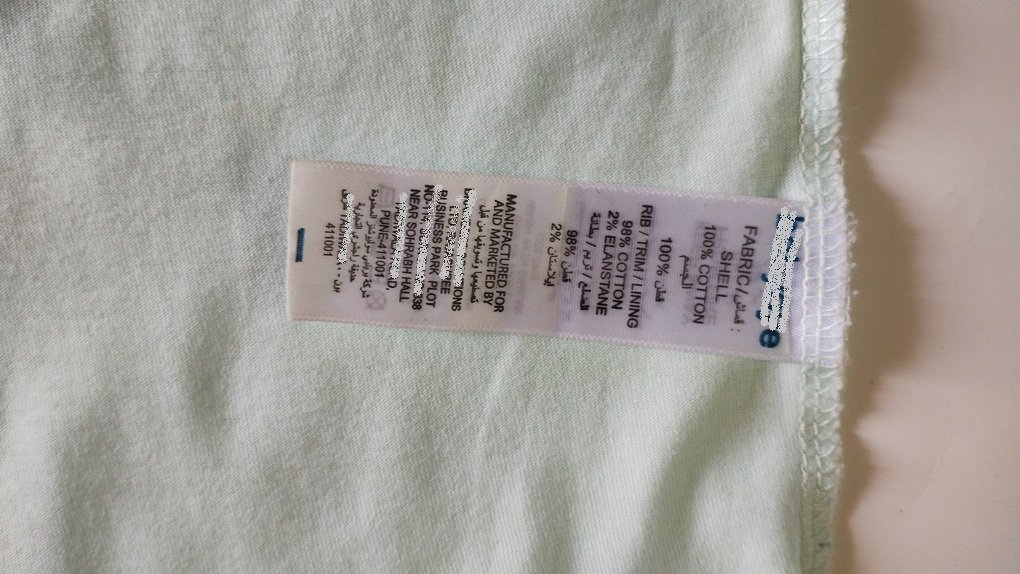
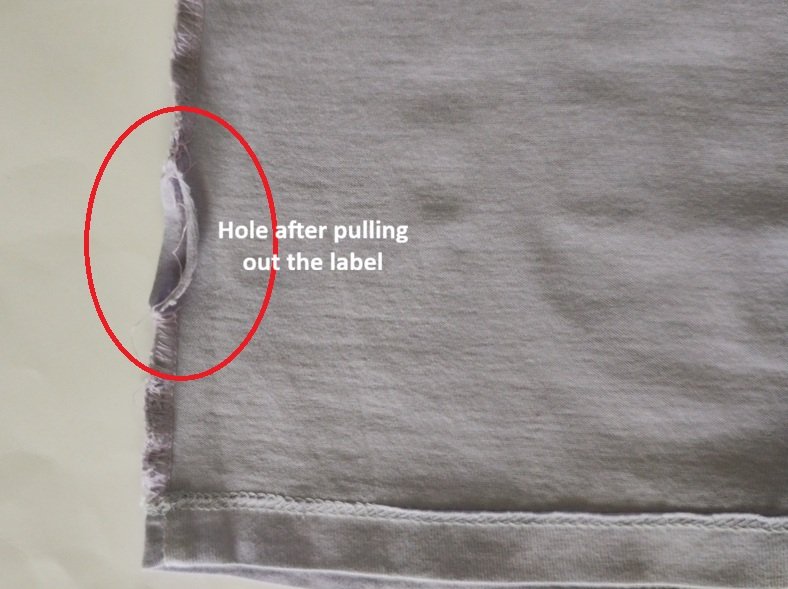
It is not just a minor flaw; the garment is genuinely damaged. Unless you take the time to sew the broken seam back together, you are left with a one-inch hole in the side seam or back rise. Most people won’t bother taking a basic t-shirt or pair of shorts in for repair. You might wear it around the house, but you certainly won’t wear it out.
I am sharing this story to highlight a widespread manufacturing mistake. Quality checkers often pass these garments because main-overlock label attachment isn’t flagged in their quality standards. They don’t see what happens to the garment after it is sold. Technical design, production, and quality control teams must update their standards and stop stitching labels directly into the main overlock seam.
Here is a look at why this practice hurts quality, along with better alternatives you can use instead.
Why You Should Avoid Attaching Labels directly into the Main Overlock
- Poor Durability & Garment Damage: Because the label is bound into the main construction stitch, pulling it tears the main seam apart and leaves an irreparable hole in the side seam.
- Skin Irritation: The rough, raw-cut edge of the label sits directly against the skin, trapped tightly inside the stiff overlock threads along the side seam.
- Reduced Legibility: The main overlock threads wrap over the edges of the label, often covering up important care instructions and safety text.
Better Alternatives for Attaching Labels in the Side Seam
- Single-Layer Pre-Stitching: Tack the label flat onto an un-sewn fabric panel first using a single-needle stitch before overlocking the side seam. If the label is pulled later, only the single-needle tack breaks, leaving the main side seam intact.
- Loop Attachment with Secondary Run Stitch: Fold the care label into a loop and attach it into the side seam using a separate run stitch line after or alongside the overlock, preventing main seam failure upon removal.
- Heat Transfer Printing: Print care details directly onto the inside panel at the side seam location. This delivers a clean finish without physical tags or additional sewing steps.
Conclusion
Providing clear wash instructions, fabric content, and origin details is an essential standard for any garment. However, the label should never be attached in a way that causes the garment to tear apart during everyday use.
If you work in apparel, please share this article with your product designers, quality control teams, and production management. Raising awareness is the first step toward putting an end to this flawed practice.









Leave a Reply