

Answer:
Fabric cost and fabric consumption are interrelated. Fabric cost is defined as the amount of money is incurred per garment for the fabric consumed in making a garment.
Fabric consumption is defined as the average meter(s) (or Kgs for knits) of fabric required to make the garment. Generally, fabric consumption is calculated using the following steps –
- Pattern master develops patterns for the garment with seam margins.
- Garment patterns are then placed on the fabric laid flat on the table as close as possible to each other.
- The linear length of fabric that is covered by the patterns is measured (for woven fabric). This measured length is the consumption of the garment. Wastage percentage is added to it to get average consumption.
If there is a large uncovered space with the measured length then the double marker is used instead of a single marker to maximize the accuracy of garment consumption. Nowadays most garment manufacturers use CAD systems to determine fabric consumption.
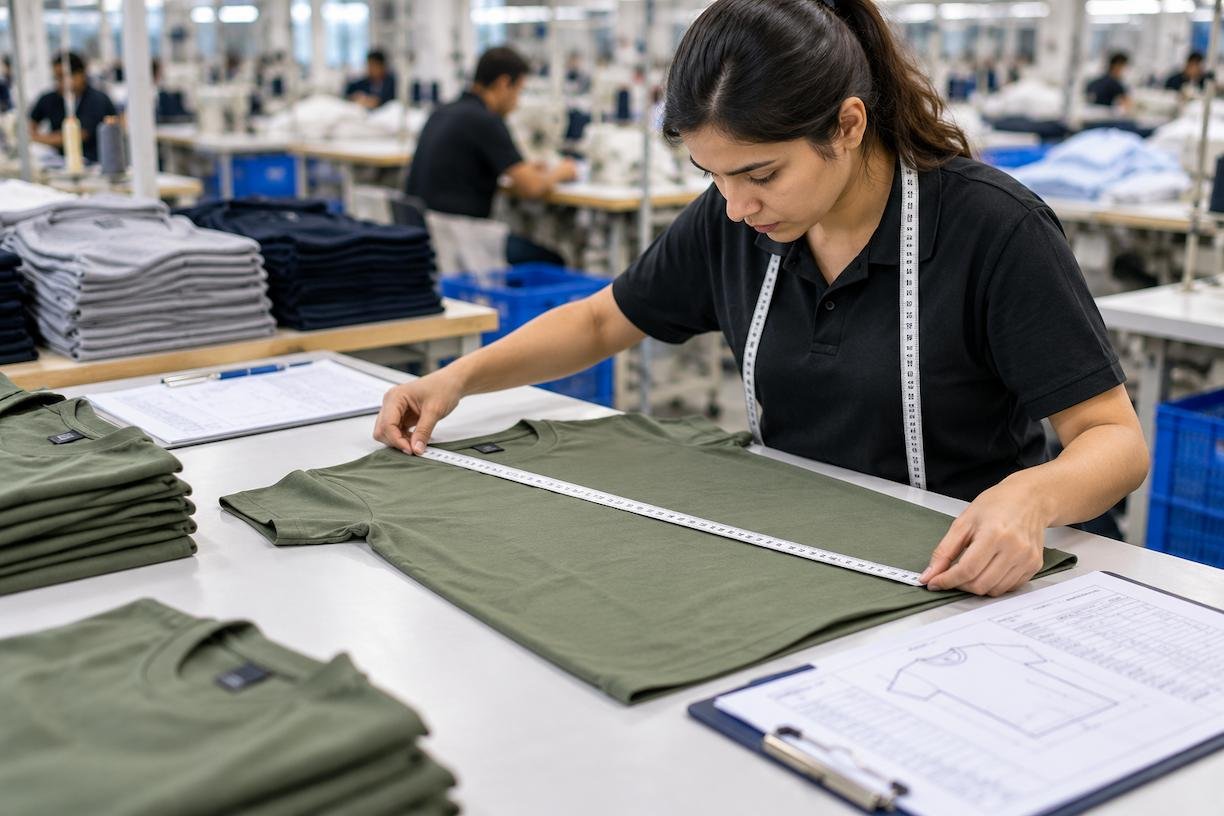
For basic products such as T-shirts, fabric consumption can be estimated from the garment specification (measurement sheet).
To determine fabric cost for the garment, first fabric consumption is calculated as above.
To know more about how merchants calculate fabric and other material costs read our earlier article “How to calculate the raw material cost for a garment?“









Leave a Reply