


Have you ever been looking through old family photos and seen an outfit that’s in a store window today?
That’s not a coincidence.
Fashion doesn’t move forward in a line. It moves in circles. A silhouette disappears for twenty years or so, hides quietly at the back of our collective consciousness, and then reappears with a different hemline.
And here’s the part most people miss:
Nothing ever returns exactly the way it left.
What you’ll walk away with:
- What The Fashion Cycle Actually Is
- Why Old Shapes Start Feeling New Again
- The Twenty Year Rule (And Why It Keeps Shrinking)
- How To Spot A Comeback Before Everyone Else
What The Fashion Cycle Actually Is
The fashion cycle is the life journey of a trend, from “ghastly!” to “OMG I LOVE IT!” and beyond.
It moves through five rough stages:
- Introduction – a designer, stylist or subculture puts the shape out there
- Rise – early adopters and social feeds pick it up
- Peak – the high street floods with cheap copies
- Decline – shoppers get bored and the shape starts to feel dated
- Rejection – it turns into a punchline
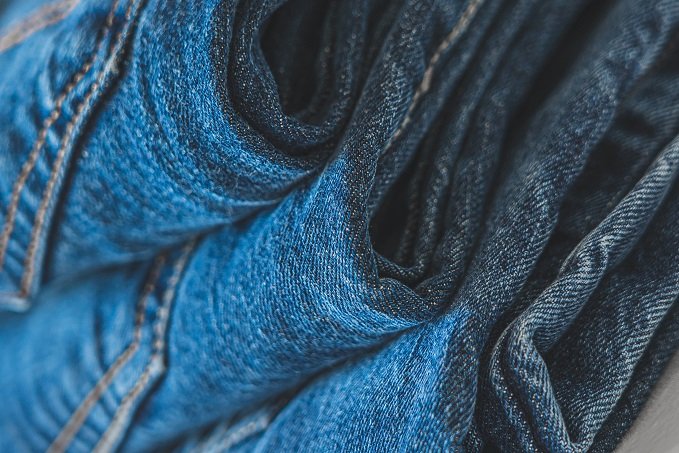
Then weird stuff occurs. Wait long enough and the punchline becomes adorable once more. Jeans with low rises were ridiculed non-stop for years. See you around now.
It’s not just chaos though. It cycles because of memory…and that’s where this becomes interesting.
Cultural Heritage In Clothing Is The Engine Behind It All
Clothes tell stories about who wore them first. Labourers wore workwear denim. Soldiers wore trench coats. Bomber jackets, kilts, kimonos, guayaberas – every garment is a timestamp on a location, profession, or era. This is clothing’s cultural heritage and it never truly vanishes. It just fades to black.
Designers know this better than most. Most big fashion houses have their own archive library of past collections, and studying archive fashion is now part of the design process when developing new collections. A cutter grabs a blazer from 1974, measures the shoulder, tweaks the proportions and sends it down the runway inspired by “memory”… but makes it “new”.
Nothing was invented there. Something was remembered.
Why does this matter to you?
When you realize clothing has legacy, things like loops aren’t so arbitrary. Vintage styles resurface because they mattered to somebody. Mattering surpasses trendiness.
The Twenty Year Rule (And Why It Keeps Shrinking)
It used to be said that any fashion needs approximately twenty years before it becomes fashionable again.
The logic holds up. Twenty years is roughly the amount of time it takes for the original wearers of something to stop flinching at it. And for enough time to pass for a new generation to discover it anew. You need distance for nostalgia.
But that gap is closing fast.
Social squash time. Styles can emerge, be replicated, worn out and rediscovered all in the space of one year nowadays. And the retail figures prove it. Circana reported that low-rise denim was the fastest-growing denim cut of early 2026, while small shoulder bags rose 24% in dollar sales year-on-year to May.
They both are Y2K forms. That right there is a twenty five year cycle.
The takeaway is simple:
Old silhouettes aren’t returning slower. They’re returning faster, and often in overlapping waves.
Why Shoppers Actually Want The Old Shapes
You blame nostalgia for all of that, but it’s only part of the problem.
Price matters most. Secondhand garments are typically cheaper than buying new, and consumers have taken notice. In the United States, secondhand sales hit $55.5 billion in 2025, nearly 12% of what Americans spent overall on apparel, footwear and accessories that year.
Then there’s the individuality factor.
If everyone is on trend, vintage will make you stand out from the crowd. An authentic 1990s track jacket will always trump a new replica of a 1990s track jacket. It has the heft, wear, and provenance that a new one doesn’t.
And finally… quality.
Old clothes used to be constructed to last. Heavier material, closer sewing, real buttons instead of cheap plastic circles. If you’ve ever felt a forty year old coat against one from fast fashion you know the disparity immediately.
Combine those three: price, uniqueness and quality. Clearly see why history continues to sell.
How To Spot A Returning Silhouette Early
Want to preview the loop before it hits stores? Build these three habits.
Watch What Stylists Pull From The Past
Costume designers, stylists and museum exhibitions usually take their cue. If you see one decade or era popping up over and over in movies, television and music videos, you can be sure the silhouettes will arrive somewhere down the line within a year or two. The screen always precedes the street.
Follow The Resale Search Data
Resale sites release what people are searching for, and some of those spikes are massive. Searches for vintage athletic wear have increased triple and quadruple digits % over past seasons. Search intent is the earliest genuine indicator available, as people search for something long before purchasing it.
Look At What Young Shoppers Are Thrifting
Charity shops/market stalls are volunteer trend forecasters. Whatever Kids are pulling out of trash cans this season will probably be what you’ll see brands producing new of 18 months from now.
Simple, right? None of this needs a forecasting agency. It just needs attention.
What This Means For Your Own Wardrobe
Here’s a practical way to put all of this to work.
Stop chasing. Start keeping.
If you love a shape that goes out of style, it doesn’t mean it’s gone forever. It means it’s taking a nap. The blazer that was boring 3 years ago will probably be trendy again shortly, and buying two of the same thing is silly.
A few rules that hold up well:
- Keep well-made pieces even when they feel out of step
- Buy shapes that suit your body over shapes that suit the moment
- Treat vintage as an investment, not a costume
- Repair before you replace
And the last one is more important than most realise. Every piece of clothing that stays in circulation is one less piece of clothing manufactured, which is why tradition in clothing lasts long enough to make a comeback in the first place.
Tying The Thread Back Together
Old silhouettes return because fashion has never really been about invention. It’s about interpretation.
Designers dig through history, snatch up a shoulder or a waistline, and re-present it altered for modern times. Shoppers dig through history for prices, integrity and durability. Somewhere between here and there, an unforgivable shape from ten years ago becomes your new wardrobe necessity.
The cycle isn’t slowing down, either. It’s tightening.
Therefore next time you have an article of clothing that starts to look boring…Don’t rush to donate it… Chances are it’s just queuing up.
Image credit: https://www.pexels.com/photo/photo-of-a-couple-looking-at-each-other-while-riding-a-bicycle-10071550/







Leave a Reply