
Introduction
Two hoodies can look almost identical in a product photograph and carry very different manufacturing costs. The difference is often hidden in fabric consumption, finishing requirements, sample revisions, and the production method behind a small chest logo. This article will cover the factors that derive the cost to manufacture a custom hoodie.
For apparel buyers and merchandisers, the useful question is not simply, “What is your price per piece?” It is, “What assumptions produce that price?” A quotation becomes meaningful only when fabric, construction, decoration, order quantities, and approval requirements are defined consistently.
The factory’s garment price is also only one part of landed cost. Development charges, sample shipments, bulk freight, duties, and other applicable import costs must be allocated across the units received. A cheap initial quotation can become an expensive order when those assumptions change.
The following four areas help buyers identify the main cost drivers before sending a request for quotation, or RFQ.
1. Fabric GSM and fleece vs French terry cost levers
GSM affects consumption, but it does not explain everything
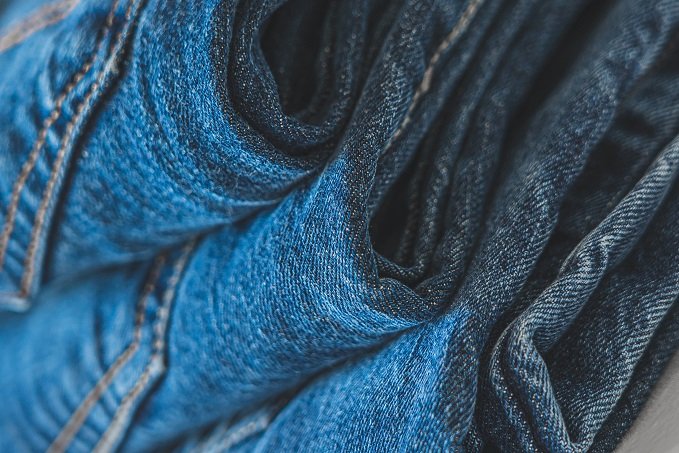
GSM means grams per square meter. If two fabrics have the same usable width and are cut with the same marker, the higher-GSM fabric requires more kilograms for the same number of garments. When fabric is purchased by weight, this directly affects material cost.
However, GSM alone cannot establish a hoodie price. Fiber composition, yarn quality, knitting structure, dyeing, finishing, and usable width also matter. A lower-GSM fabric with a more expensive composition or finish can cost more per garment than a heavier basic fabric.
Ask suppliers to quote against a defined fabric specification:
- Fiber composition and target GSM.
- Acceptable weight tolerance and the condition in which weight is measured.
- Usable fabric width.
- Required hand feel, surface appearance, and shrinkage performance.
- Whether the fabric is available from stock or requires a production run.
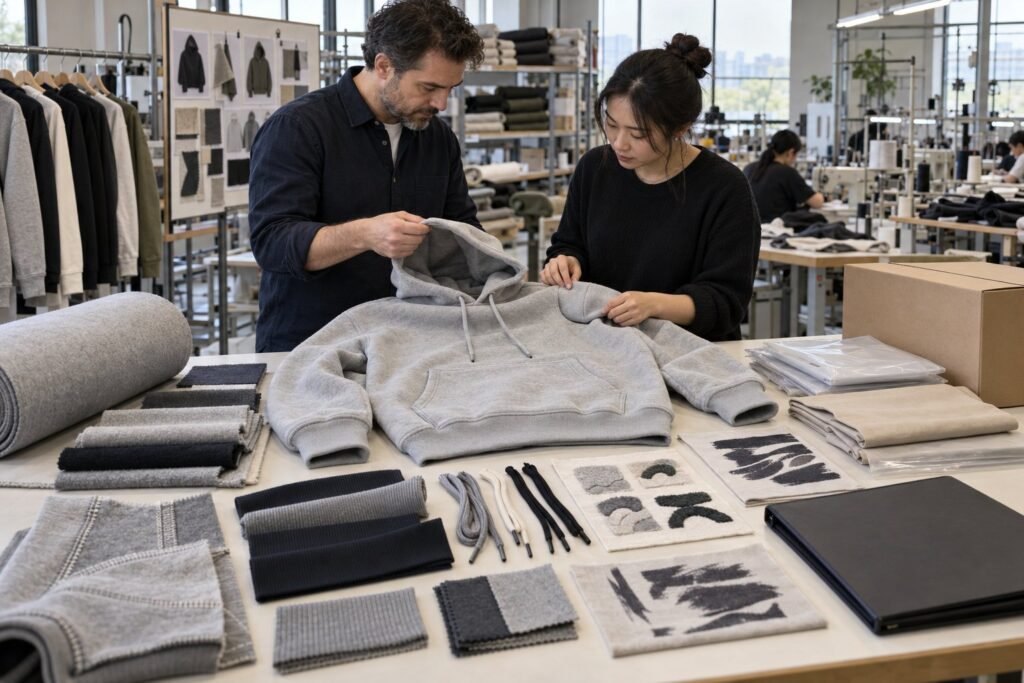
Consumption should reflect the actual garment. An oversized body, dropped shoulders, a large hood, and a kangaroo pocket all add material. A self-fabric double-layer hood uses more shell fabric than a single-layer hood. Rib cuffs and waistbands should be costed separately where they use a different material.
Marker efficiency and shrinkage allowances matter too. Comparing only a fabric’s price per kilogram misses how much of it becomes a finished hoodie.
Fleece and French terry require different specifications
In common sweatshirt terminology, fleece generally has a brushed inner surface, while French terry retains visible loops on the inside. Buyers should confirm this with a reference swatch because suppliers may use fabric names differently.
Brushing adds processing and changes the hand feel. Requirements for a dense, even brushed surface, low shedding, or controlled pilling can affect fabric selection and finishing cost. French terry avoids that particular brushed finish, but it is not automatically the cheaper option. Fine yarns, a dense loop structure, specialty fibers, or additional finishing can outweigh that difference.
Compare the two fabrics at equivalent composition, weight, quality, and performance requirements. Otherwise, the comparison mixes several cost variables.
Stock availability can be just as important as fabric type. A stock fabric may support a smaller garment order, while a custom weight or color may trigger a mill minimum. If the order does not consume the required fabric quantity, clarify whether the buyer pays for the balance and who owns it.
2. Sampling loops that inflate landed cost
Unclear decisions create repeat work
Sampling is necessary development work. The cost problem begins when each sample reveals a requirement that could have been stated earlier.
A typical loop starts with an incomplete size chart or a loose instruction such as “heavyweight with a premium fit.” The factory makes reasonable assumptions. The buyer then changes the silhouette, fabric, hood shape, and logo dimensions together. The next sample becomes another development exercise instead of a focused confirmation.
Each round can add pattern work, sample-room labor, decoration setup, material purchases, and courier charges. Some factories charge these separately; others recover part of them through the order price. Either way, repeated development consumes resources.
For internal costing, divide buyer-paid development expenses by the expected number of saleable units. This makes the effect especially clear on small orders. Keep those expenses visible even if accounting treats them separately from landed inventory cost.
Approve the right things in the right order
A practical sampling sequence separates decisions that do not need to happen together. Review fabric suitability and fit before committing to costly finished decoration on every development sample. Use an embroidery sew-out or print strike-off to assess the artwork on the intended fabric.
An approval on substitute fabric has limits. Changes in stretch, shrinkage, thickness, or surface texture can affect both fit and decoration. Record what each sample approves and what still requires confirmation.
Consolidate comments into one controlled document. Include measurements, tolerances, annotated photographs, and an updated specification revision. Conflicting comments from buying, design, and merchandising often cause avoidable repeat work.
Before development starts, establish:
- What each sample stage is intended to approve.
- Which materials may be substituted temporarily.
- How sample, setup, and shipping charges are handled.
- Who gives the final approval.
Late changes can also increase landed cost indirectly. A revised fabric or artwork file may leave less time for bulk production and encourage a more expensive shipping method. The freight increase is not a sewing cost, but the development decision helped create it.
3. Decoration: screen, puff, embroidery, and how they change MOQ
Screen printing: setup must be spread across units
Screen printing combines preparation costs with a running cost per garment. Additional colors and print locations generally require more setup and handling. Dark fabrics may need an underbase, depending on the ink system and intended result.
A simple one-color chest print and a large multicolor front-and-back design should therefore be quoted as different operations. Artwork dimensions, color count, placement, fabric, and required finish belong in the RFQ.
The economic order quantity depends partly on how many pieces share the same setup. A total order split across several artworks may provide few pieces per design. Ask whether the decoration minimum applies per artwork, colorway, placement, or some combination of these.
Puff printing: expansion adds process control
Puff printing uses an expanding ink system to create a raised surface. It requires control of ink deposit and curing conditions, plus artwork suited to the intended expansion.
Fine details, narrow gaps, and large solid areas may behave differently after expansion. The fabric surface also affects the result. Approving a flat artwork image is not enough to confirm the finished texture.
A puff design may require trials and additional inspection to achieve an acceptable result. It does not automatically require a higher MOQ than standard screen printing, but a decorator may set a minimum to recover setup and trial costs. Confirm the minimum for the actual design.
Embroidery: stitch count and handling drive cost
Embroidery cost depends on stitch count, design size, stitch density, machine time, backing, and handling. Thread color count matters, but it is not a reliable price predictor by itself.
A small, densely filled logo can take more machine time than a larger open design. Placement also matters: access near pockets, seams, or assembled hood sections can make hooping and positioning harder.
Ask for a sew-out on the intended fabric and review puckering, stiffness, backing comfort, and appearance. Digitizing may be charged separately, so clarify the terms for repeat orders.
For all three methods, distinguish the garment factory’s MOQ from the decorator’s minimum and the fabric mill’s minimum. The effective order constraint comes from the combination, not necessarily from sewing.
4. A simple cost checklist buyers can use before RFQ (Cost to Manufacture a Custom Hoodie)
Use this checklist to give each supplier the same costing basis. Mark unresolved items as options to quote separately.
Fabric and garment specification
- State fleece or French terry, composition, target GSM, finish, and performance requirements.
- Identify stock-fabric acceptance or custom fabric and color requirements.
- Provide sketches, a measurement chart, size quantities, and construction details.
- Specify hood layers, pockets, rib quality, and any fabric reference.
Sampling and approvals
- List the sample stages and the purpose of each approval.
- Request separate sample, decoration development, and courier charges.
- Identify the approved specification version and final decision-maker.
- Ask how revisions, additional samples, and any sample credits are handled.
Decoration and quantity breakdown
- Supply artwork with dimensions, colors, placement, and decoration method.
- Show quantities by garment color, artwork, and size.
- Request setup charges and running costs separately where possible.
- Confirm minimums per fabric color, garment style, and decoration design.
Comparable quotation and landed-cost basis
- Require the same currency, named Incoterm and place, packing assumptions, and quantity basis.
- Confirm what the unit price includes and excludes.
- Identify charges for unused minimum-purchase materials.
- Add development, freight, duties, and applicable destination charges without double-counting.
- Allocate costs across expected saleable units and record unresolved assumptions.
A useful RFQ makes uncertainty visible. When suppliers quote the same fabric, approval scope, decoration, and quantity breakdown, buyers can compare costs and discuss alternatives without accidentally changing the product.
Read more articles related guide to the cost to manufacture a hoodie
| This article is contributed by StitchQuote Team. StitchQuote is a China-based custom streetwear and private-label manufacturer. |