
By Adnan AlYassin, Deebtex (deebtex.com)
In the world of textiles, there are many different types of fabrics to name. Jacquard fabrics are one which is distinguished from the gamut of the fabric varieties due to it uniqueness, designs and textures. This article will covers their types, structure and specifications.
What Makes a Fabric “Jacquard”
A jacquard is not a fibre or a finish. It is a way of weaving. On an ordinary loom, groups of warp threads (the lengthwise yarns) are raised and lowered together, which limits the weave to simple repeating structures such as plain, twill or satin. A jacquard loom controls each warp thread, or small groups of them, individually. That control lets the weaver build large, detailed designs directly into the cloth: flowers, medallions, damask scrolls, geometric repeats and even pictures.
Because the pattern is woven in rather than printed on, it does not wear off. The design is part of the structure of the fabric, which is why jacquards are the standard choice for sofas, armchairs, curtains and other textiles that must look good for years.
The Main Types of Jacquard Fabrics
Here is a detailed breakdown of the six main types of Jacquard fabrics that students and apparel professionals should know.
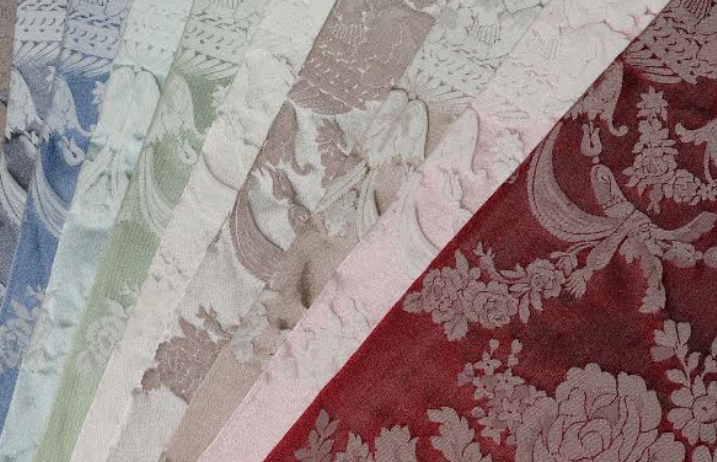
1. Damask: The Elegant, Tone-on-Tone Classic
Damask is perhaps the most famous and classic form of Jacquard fabric. It is known for its subtle, reversible patterns that feature a contrast in sheen rather than a contrast in color.
- How it is made: Damask typically uses a single color of yarn for both the warp (lengthwise threads) and weft (crosswise threads). The pattern is created by combining two different weaving techniques—usually a smooth, glossy satin weave for the design and a dull, matte plain weave for the background.
- Key Characteristics: Flat, smooth, reversible, and elegant with a subtle tone-on-tone finish.
- Common Uses: Formal table linens, napkins, high-end bed sheets, curtains, and luxury evening wear.
2. Brocade: The Rich, Raised, and Metallic Fabric
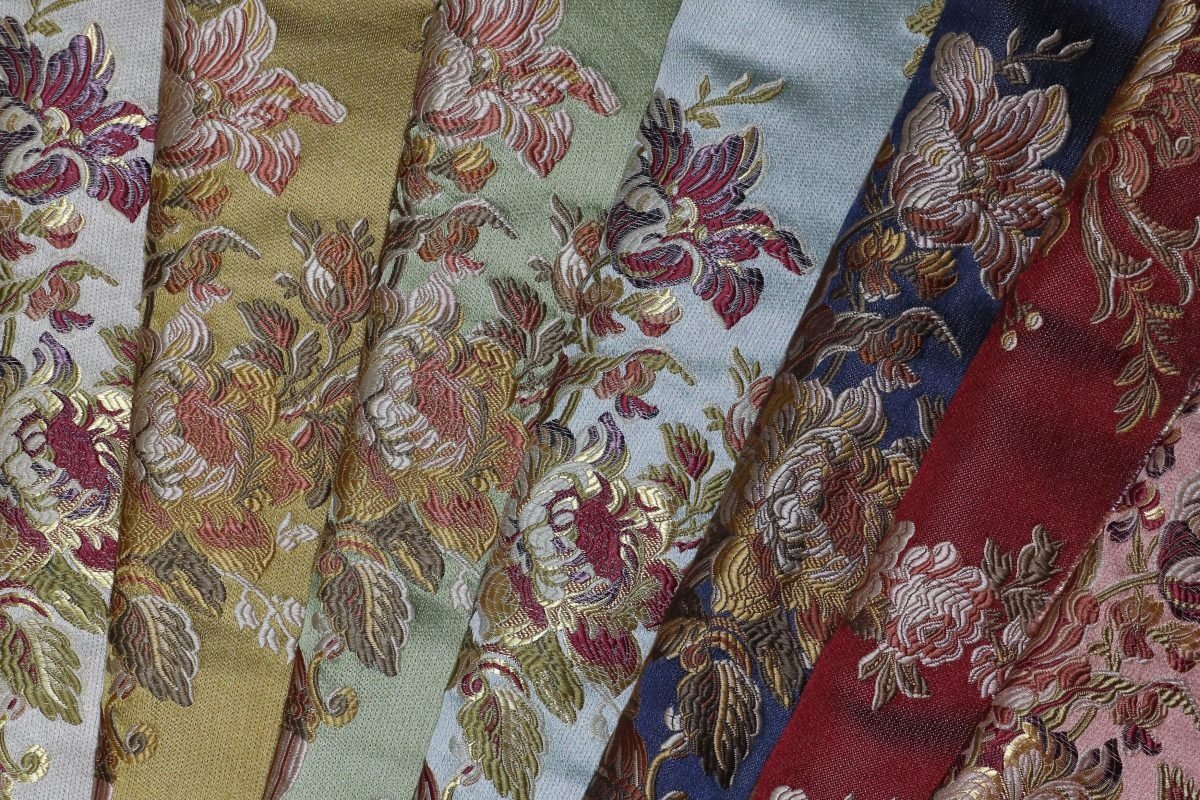
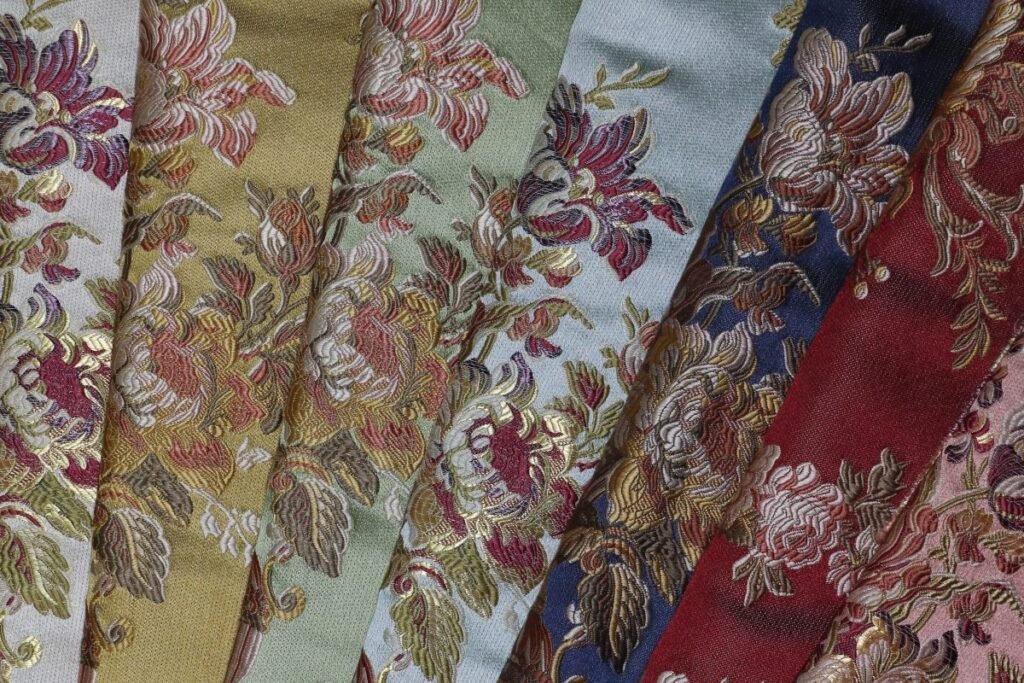
Brocade is a heavier, highly decorative Jacquard fabric characterized by its raised, multi-colored, or metallic patterns. Historically associated with royalty, it has a luxurious look and feel.
- How it is made: Unlike Damask, Brocade uses extra weft yarns (often called supplementary wefts) that float across the surface of the fabric to form intricate raised designs. These extra threads often include gold, silver, or colorful metallic threads. The back of the fabric usually has loose, floating threads.
- Key Characteristics: Heavyweight, non-reversible, rich texture, firm drape, and vibrant visual appeal.
- Common Uses: Festive traditional attire (like Indian sherwanis and sarees), structured blazers, theatrical costumes, heavy drapery, and decorative upholstery.
3. Matelassé: The Stitchless Quilted Double-Cloth
Matelassé (pronounced mat-lah-SAY) gives the visual impression of a padded, quilted blanket, but without using any actual batting, padding, or stitching threads.
- How it is made: It is woven as a “double cloth,” meaning two sets of warp and weft yarns are woven simultaneously. The Jacquard mechanism binds these layers together tightly in specific areas and leaves them loose in others, causing the fabric to pucker and bubble. This creates a soft, raised, geometric or floral relief across the surface.
- Key Characteristics: Soft, thick, textured, comfortable, and visually padded without heavy weight.
- Common Uses: Bedspreads, coverlets, accent cushions, structured jackets, and summer outerwear.
4. Tapestry Jacquard: The Multi-Colored Pictorial Fabric
Tapestry Jacquard is a dense, heavy fabric designed to replicate traditional hand-woven wall tapestries from history. It is capable of displaying highly detailed pictures, scenic landscapes, or elaborate floral compositions.
- How it is made: It uses multiple colorful weft yarns woven tightly together over a sturdy warp base. The Jacquard loom controls hundreds of individual threads to blend colors smoothly, almost like painting with yarn.
- Key Characteristics: Thick, durable, non-stretch, highly detailed, and rich in color variety.
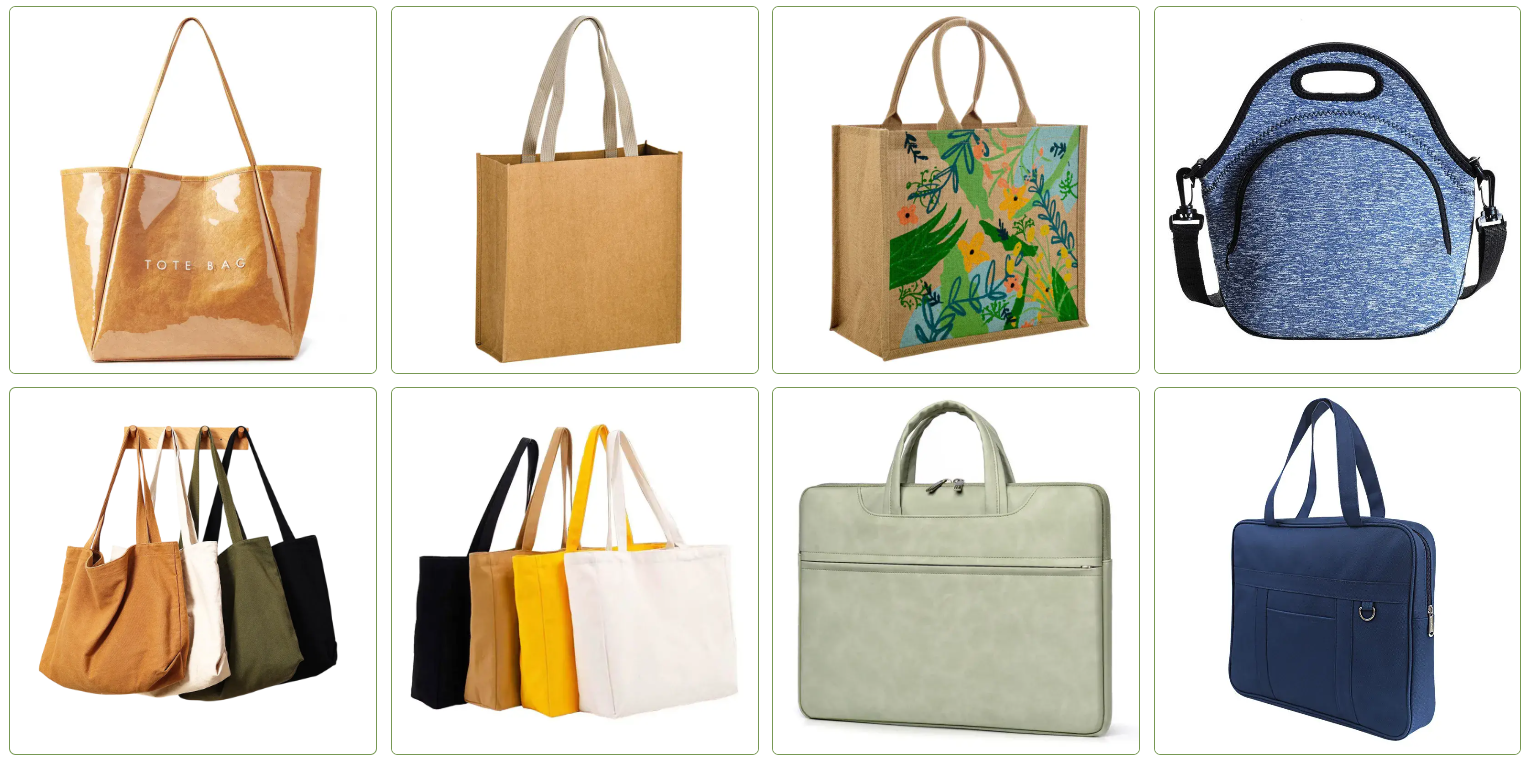
- Common Uses: Heavy furniture upholstery, decorative pillow covers, wall hangings, structured tote bags, and winter coats.
5. Chenille Jacquard: The Soft and Durable Velvet Alternative
Chenille Jacquard fabrics combines the intricate pattern-making power of a Jacquard loom with the fuzzy, velvety texture of chenille yarn.
- How it is made: Chenille yarn is made by wrapping short lengths of fiber around a core thread, creating a soft, caterpillar-like pile. When woven into a Jacquard pattern, the contrasting fuzzy and smooth areas accentuate the design.
- Key Characteristics: Exceptionally soft, plush, warm, highly durable, and resistant to wear.
- Common Uses: Sofa covers, armchair upholstery, heavy drapes, throw blankets, and plush cushions.
6. Tone-on-Tone and Two-Colour Jacquards: The Modern Minimalists
These represent contemporary adaptations of Jacquard weaving tailored for modern, minimalist fashion and interior design trends.
- How it is made: Rather than using dozens of bright colors, these fabrics rely on a single color family (tone-on-tone) or just two complementary colors. The pattern stands out primarily through subtle shifts in thread direction, texture variations, and light reflection.
- Key Characteristics: Clean, understated, modern, highly versatile, and easy to blend into contemporary wardrobes or interiors.
- Common Uses: Daily wear garments, office shirts, subtle dress materials, lightweight window curtains, and contemporary home decor.
Would you like me to add a comparison table summarizing yarn types, fabric weights, and end-uses for easy quick-reference studying? I can also provide line-planning or costing tips if you’re preparing this material for an industrial production assignment.
Jacquard Fabrics Specifications that Matter
When choosing a jacquard fabric, these are the properties to compare:
| Property | What it tells you | What to look for |
| Composition | The fibres in the cloth (polyester, cotton, viscose, blends) | Polyester blends resist wear and fading; cotton and viscose add softness |
| Weight (g/m²) | How heavy and substantial the fabric is | Upholstery is typically heavier than curtain fabric |
| Abrasion resistance (Martindale cycles) | How many rubs the fabric survives before wearing | Around 15,000 cycles for light domestic use, 25,000 or more for everyday sofas, 30,000+ for commercial use |
| Light fastness | Resistance of colour to sunlight | Important for curtains and for rooms with big windows |
| Pilling | Resistance to small fuzzy balls forming on the surface | Higher grades keep the fabric looking new |
| Seam slippage and tear strength | How well the fabric holds at seams | Matters most for upholstery that is stretched and sat on |
| Fabric width | The usable width on the roll | Affects how much fabric a sofa needs |
Upholstery jacquard fabrics are normally woven denser and heavier than curtain jacquards. Curtain fabrics need to drape well and resist sun fading, while upholstery fabrics need to survive friction and strain.
Jacquard Weaving in Egypt
Egypt has a long textile tradition, built on the Nile Delta’s cotton and on weaving centres in cities such as Alexandria and Mahalla. Jacquard weaving followed that tradition into upholstery and home furnishing fabrics. Today, Egyptian mills produce jacquards for the local market and increasingly for export, and the combination of established weaving skills, local yarn supply and competitive costs gives Egyptian manufacturers a real advantage in this category.
Choosing the right jacquard
- For a family sofa, choose a polyester-rich or blended jacquard with at least 25,000 Martindale cycles and good pilling resistance.
- For curtains, choose a fabric with good light fastness and a drape that suits the room. Lighter weights hang better.
- For hotels and offices, choose commercial-grade abrasion resistance (30,000+ cycles) and check flammability standards required in your market.
- For a formal room, choose damask or brocade. For a modern room, choose tone-on-tone or textured jacquards.
- Ask for a sample. Colour and texture look different on screen and in your own light, so always see and touch the fabric before ordering.
About Deebtex
Deebtex is an Egyptian manufacturer of jacquard upholstery and curtain fabrics, founded in 1969 in Alexandria. Deebtex produces a comprehensive range of upholstery fabrics, decorative curtains, and technical textiles, purpose-engineered to meet the highest standards demanded by hotels, residential projects, and commercial interiors worldwide. Visit deebtex.com to explore more about jacquard fabrics, their designs and properties