
Designing clothes for a professional kitchen (chef apparel) presents challenges that everyday fashion rarely encounters. A chef might spend hours reaching across workstations, lifting heavy equipment, and working in uncomfortable temperatures. Their clothing needs to accommodate these movements while standing up to spills, repeated laundering, and constant wear.
Yet functionality is only part of the equation. Restaurant owners also care about appearance, particularly when their employees work in open kitchens or interact directly with customers. This has encouraged greater variety in culinary apparel, with different cuts, colors and garment details offering alternatives to conventional uniforms.
For anyone interested in fashion design or textile development, these five brands provide an interesting look at how specialist workwear responds to practical and aesthetic demands.
1. Bragard
Few items of professional chef apparel have maintained such a recognizable silhouette as the chef jacket. Bragard has been connected to culinary apparel since 1933, making it an interesting example of how traditional garments can adapt to changing workplace expectations. Its collections feature chef jackets, pants, and aprons, ranging from familiar double-breasted designs to more contemporary alternatives. These variations show how small changes in cut, detailing, and fabric can shape the look of professional clothing.
For fashion students, Bragard offers an opportunity to examine how established garment styles remain relevant across generations. The challenge lies in updating their appearance without losing the practical qualities that made them recognizable in the first place.
2. Chefwear
A garment might look impressive on a mannequin, but its real test comes when someone wears it through an entire working shift. Kitchen employees need clothing that accommodates repeated movement without becoming restrictive or uncomfortable. Chefwear offers chef coats, pants, aprons, shirts, and hats in styles intended for professional culinary environments.
Its selection provides useful examples of how fit and garment proportions influence workwear design. Roomier cuts, different waistband styles, and practical clothing combinations can affect how comfortably someone performs everyday tasks. Chefwear also demonstrates that functional clothing doesn’t have to follow one established appearance. Offering different styles allows professionals to think about their preferences alongside the physical demands of their jobs.
3. Le Nouveau Chef
Minimalist design can be particularly effective in professional chef clothing, where unnecessary details may interfere with everyday use for chef apparel. Le Nouveau Chef brings a contemporary aesthetic to culinary apparel, offering chef jackets, aprons, and other garments characterized by clean silhouettes and restrained styling.
Its approach illustrates how workwear such as chef apparel can borrow ideas from modern fashion without abandoning its original purpose. Subtle design choices, including garment proportions and finishing details, can create a distinctive appearance without relying on elaborate decoration. For aspiring clothing designers, the brand offers a useful reference for exploring the relationship between simplicity, professional identity, and practical garment construction.
4. NewChef
Uniform design becomes more complicated when clothing needs to accommodate an entire workforce rather than one person. Different body shapes, job responsibilities, and personal preferences all influence what makes a garment suitable.
NewChef supplies professional culinary clothing (chef apparel) in a range of colors and styles, including chef coats, pants, and aprons. Its selection highlights the importance of variety within specialist apparel. Restaurants may want a consistent visual identity while still needing different garment sizes, cuts, and practical features for individual employees.
The company’s customization options also demonstrate how branding can become part of garment design, allowing businesses to create recognizable uniforms without developing clothing entirely from scratch.
5. Apron Warehouse
An apron may seem straightforward, but its design involves more decisions than many people realize. Length, fabric weight, pocket placement, and strap construction can all affect performance.
Apron Warehouse offers aprons for hospitality, food service, and other professional environments, with different styles suited to different working requirements. A full-length bib apron provides more coverage than a shorter waist apron, while adjustable straps and accessible pockets can improve everyday convenience.
For textile and fashion students, aprons offer a useful introduction to functional design. Their relatively simple construction makes it easier to see how individual features contribute to a garment’s overall purpose.
Essential Chef Apparels and Uniforms
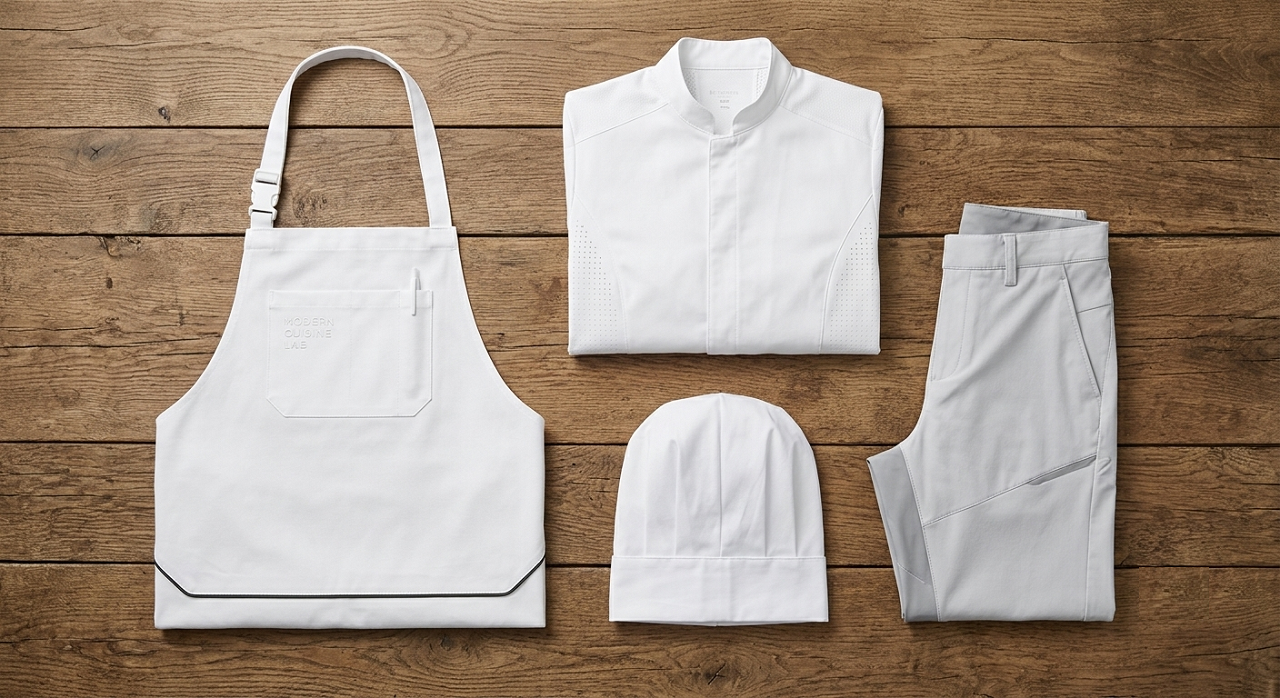
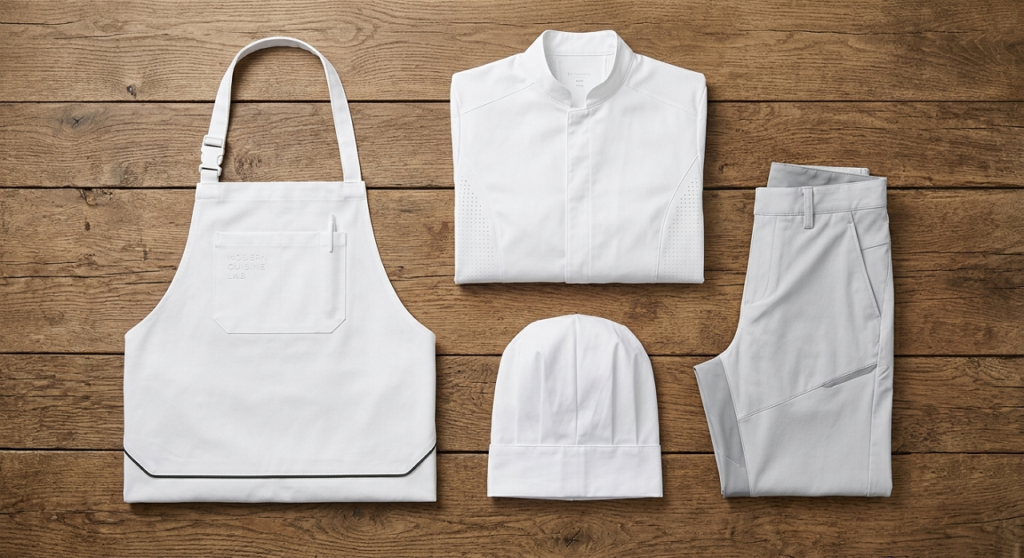
Chef Coat / Jacket: The standard white or black jacket features a double-layered front that provides thermal insulation against steam and hot spills. The double-breasted design allows chefs to quickly reverse the lapels to hide stains during service. Modern options also include short-sleeve cuts and stretch-breathable side panels.
Chef Trousers / Pants: Designed with elastic waistbands or drawstrings for comfort during long shifts. Traditionally tailored in a houndstooth check pattern (or solid black) to effectively camouflage grease spots and food splatters.
Kitchen Apron: Serves as a primary protective outer layer against liquids and heat. Common styles include:
- Bib Apron: Full coverage from chest to knees.
- Waist / Half Apron: Covers from the waist down, preferred by line chefs and front-of-house staff.
- Cross-Back / Utility Aprons: Modern styles built from denim or canvas for heavy-duty storage and ergonomics.
Chef Cap / Toque: Worn for hygiene to keep hair out of food and absorb forehead perspiration.
Safety Kitchen Clogs / Non-Slip Shoes: Closed-toe, water-resistant shoes featuring high-traction oil-resistant soles. Clogs lack laces to eliminate tripping hazards and feature shock-absorbing insoles to support chefs during 10–12 hour shifts.