
By Sava, Founder, Peach Labels
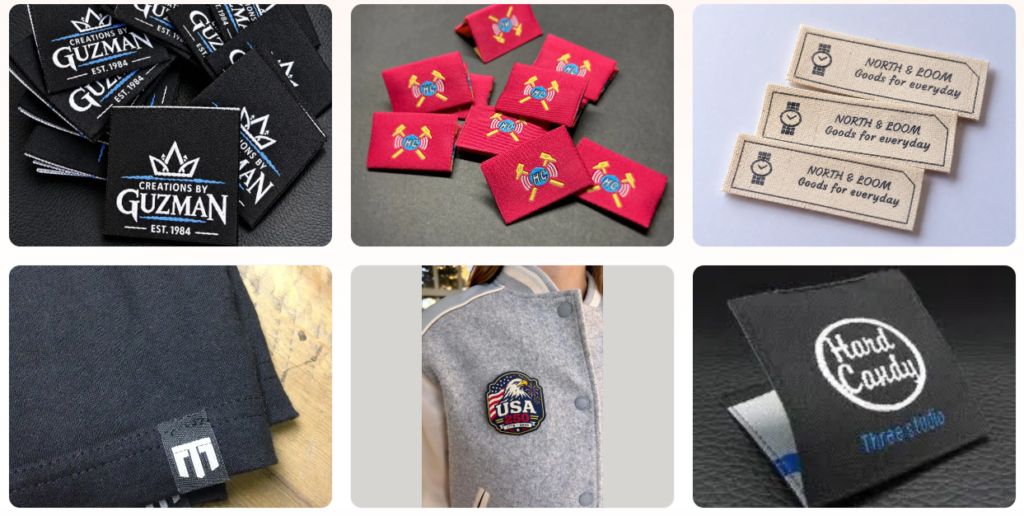
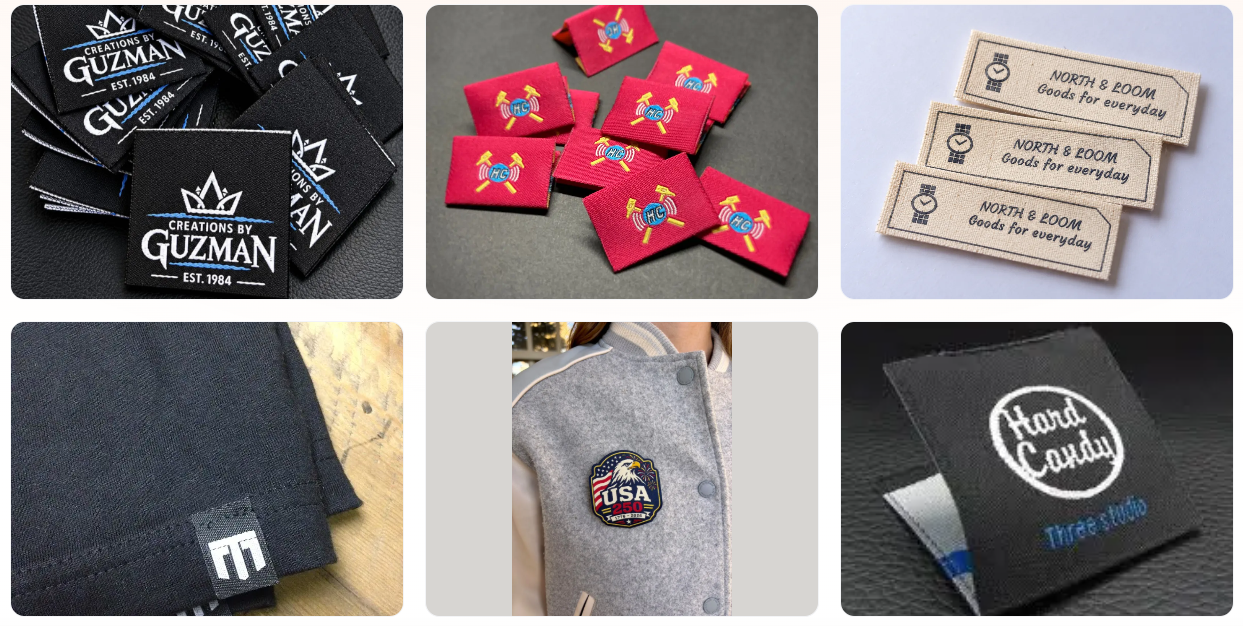
Most guides to garment labels explain the types well: woven label, printed label, heat transfer, and where each one goes on a garment. What they rarely answer is the question a merchandiser asks next. What does a label actually cost, and how does that change with the order quantity?
Part of the reason is that the numbers are hard to find. Most label suppliers quote on request, so prices stay inside email threads. This article uses one supplier’s full published price table, from my own company, to show how label cost behaves as quantity rises. These are one supplier’s prices, not an industry average. Other suppliers will price differently, but the shape of the curve comes from how labels are made, and that is common to the industry. The full table is public and free to download as a CSV, so every figure below can be checked.
Related Article | Garment Labels: What They Are, Types, and Why They Matter
Unless stated otherwise, the woven label in the examples is a 2″ × 0.8″ (50 × 20 mm) damask label in two thread colours. All prices are in US dollars per piece and exclude shipping and import duties.
The price table
| Item (USD per piece) | 50 | 100 | 250 | 500 | 1,000 | 2,000 |
|---|---|---|---|---|---|---|
| Woven label 2″ × 0.8″, 2 colours | 1.22 | 0.94 | 0.448 | 0.302 | 0.245 | 0.159 |
| Woven label 2″ × 0.8″, 6 colours | 1.30 | 0.98 | 0.488 | 0.338 | 0.283 | 0.197 |
| Woven patch 75 mm | 1.66 | 1.30 | 0.672 | 0.550 | 0.467 | 0.428 |
| Printed satin care label 30 × 70 mm | 0.36 | 0.32 | 0.232 | 0.168 | 0.119 | 0.100 |
| Hang tag 90 × 40 mm | 0.54 | 0.46 | 0.296 | 0.218 | 0.194 | 0.161 |
Source: Peach Labels published price table, October 2026.
Why small runs cost so much for woven label: setup
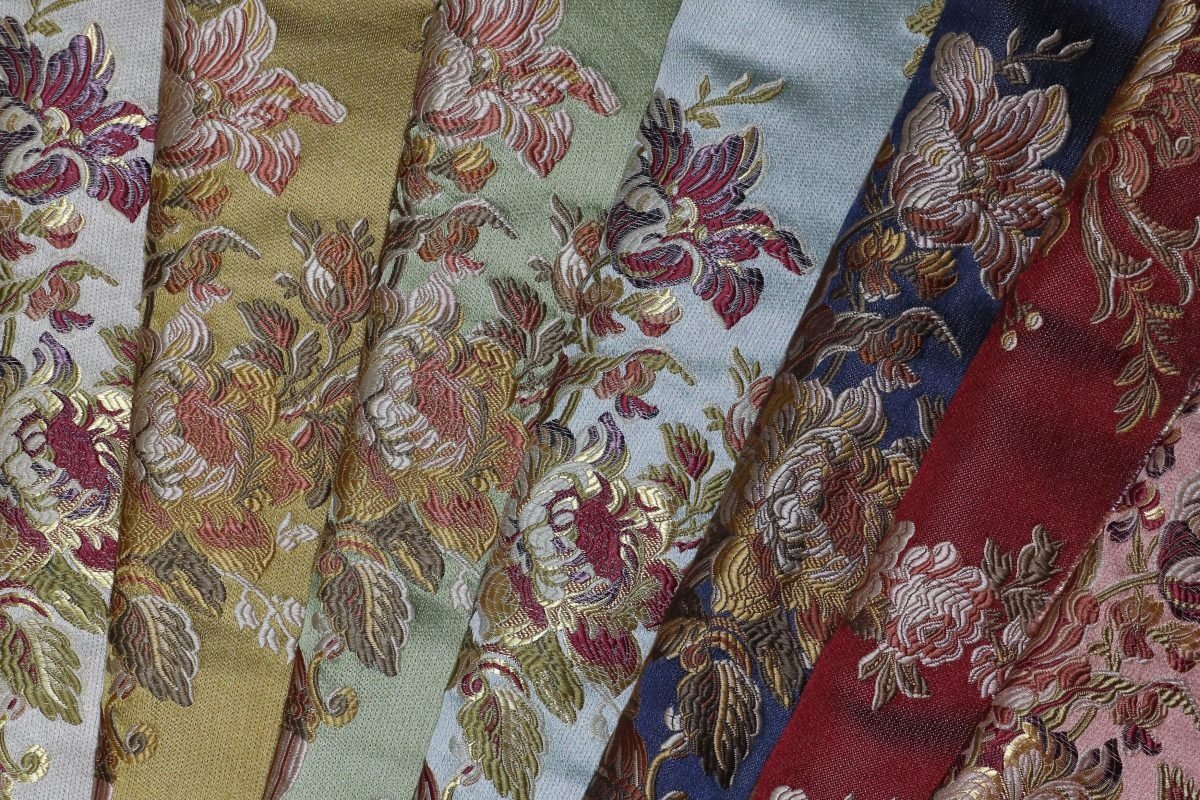
A woven label is made on a Jacquard loom. Before the first label is woven, the loom has to be prepared for that specific design: the design is programmed, the threads are set up in the right colours, and test pieces are woven and checked. That work takes roughly the same time whether the order is 50 labels or 2,000.
At small quantities, that fixed setup is spread across very few pieces, so it dominates the unit price. The 2″ × 0.8″ label costs $1.22 each at 50 pieces and $0.159 each at 2,000, almost eight times less per piece.
The important detail is where that drop happens. Going from $1.22 to $0.159 is a fall of $1.06 per label. By 500 pieces ($0.302), 87% of that fall has already happened. After 500, the setup is largely paid for, and what remains is mostly thread, loom time and finishing, which scale with quantity.
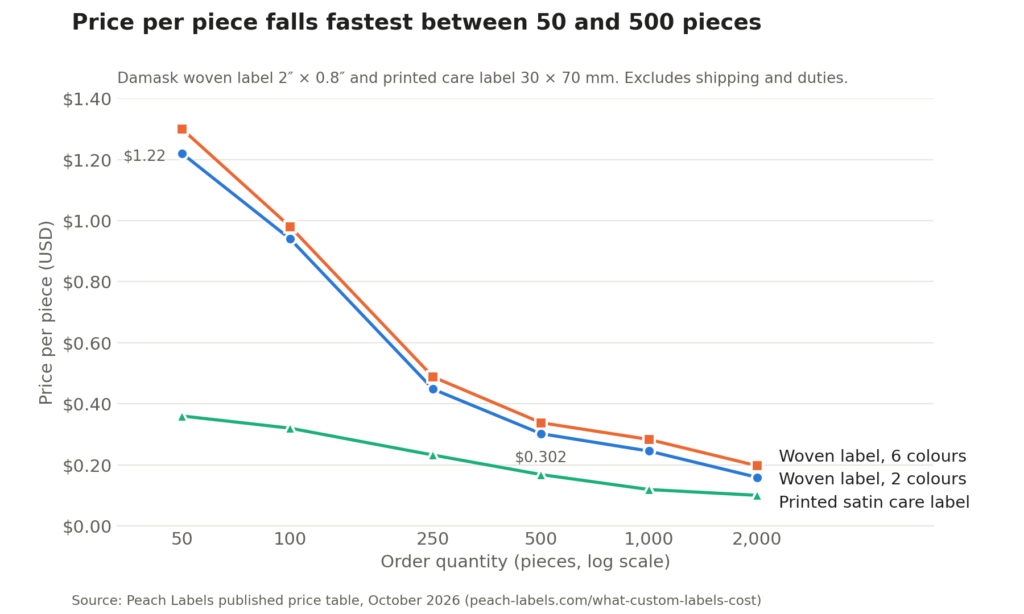
Figure 1. Price per piece by order quantity. The woven label curve is steep up to 500 pieces and flattens after that.
Look at the order total, not only the unit price
Unit price is the number everyone compares, but for a small brand the order total is often the more useful figure. On the same label:
- 100 pieces cost $94 in total.
- 250 pieces cost $112, which is 2.5 times as many labels for $18 more.
- 500 pieces cost $151, five times as many labels as the 100-piece order for about 1.6 times the money.
If a design will be used for a year or more, the next quantity tier often costs much less extra than people expect. The caution is the opposite case: labels for a design that is about to change, or for a style that may not be repeated, are money tied up in stock that may never be used. The right quantity is the number of garments the label will realistically go into during its life, not the lowest number a supplier accepts.
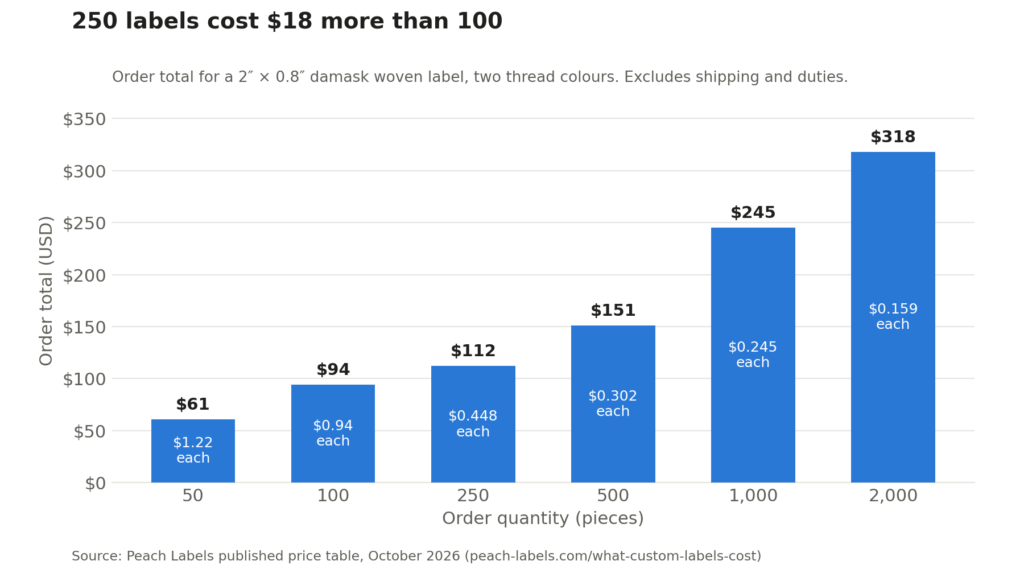
Figure 2. Order total by quantity for the same woven label. The total rises much more slowly than the number of labels.
Thread colours: a smaller effect than most people expect
A common instinct is to cut colours from a label design to save money, the way one would for screen printing, where every colour needs its own screen and its own print pass. Woven labels do not behave that way.
At 1,000 pieces, the six-colour version of the label is $0.283 against $0.245 for two colours, about 16% more. At 50 pieces the difference is even smaller in percentage terms: $1.30 against $1.22, about 7%.
There is a nuance worth knowing. From 1,000 pieces upwards, the six-colour label costs a steady extra of about four cents per piece. Because the base price keeps falling, that same four cents becomes a larger percentage, around 24% at 2,000 pieces. So colour count is not purely a setup cost. Still, four cents per label is rarely a reason to compromise a brand mark. Reducing colours makes sense when it improves legibility at small sizes, which matters more than the price.
Woven or printed
Care and content labels are usually printed on satin or similar ribbon, and the price difference against woven is large. At 1,000 pieces, a printed satin care label of 30 × 70 mm is $0.119, about half the price of the woven label at $0.245.
The difference comes from the process. Printing applies ink to a ribbon that already exists, which is fast and has little setup. Weaving builds the image out of thread on the loom, which takes longer but gives a label that does not crack, peel or fade in the wash. The usual split follows from that: printed labels for care and fibre content, where the text changes often and appearance matters less, and woven labels for the brand label that customers see.
Printed labels also drop less with quantity, from $0.36 at 50 pieces to $0.10 at 2,000, because they have less setup to spread.
Patches follow a flatter curve
Woven patches show the same pattern but less steeply. A 75 mm woven patch costs $1.66 at 50 pieces and $0.428 at 2,000, about four times less, against nearly eight times for the label. A patch uses much more thread and loom time per piece, so a larger share of its price is material and production rather than setup, and that part does not shrink with quantity.
A worked example: trim cost per garment
Labels are rarely bought alone. A simple trim set for a garment might be a woven brand label, a printed care label and a hang tag. Using the prices above:
- At 250 pieces: $0.448 + $0.232 + $0.296 = about $0.98 per garment.
- At 1,000 pieces: $0.245 + $0.119 + $0.194 = about $0.56 per garment.
For a garment that sells for $40 or more, either figure is a small line on the cost sheet. For a low-price item made in small runs, close to a dollar of trims per garment can be a noticeable share of the cost, and it is worth planning label quantities across several styles. One brand label design used on every style lets a small brand order at a higher tier than any single style would justify.
Choosing an order quantity
Pulling this together, a few practical rules come out of the numbers:
- The biggest savings are between 50 and 500 pieces. If you are ordering 50 or 100, check what 250 or 500 would cost in total before deciding.
- Past about 1,000 pieces the curve is flat. Doubling from 1,000 to 2,000 still lowers the unit price by about a third for this label, but the saving in dollars per garment is small.
- In this supplier’s pricing, the unit price stops falling at 2,000 pieces. Larger orders cost the 2,000-piece unit price multiplied out, so there is no hidden saving in ordering far ahead.
- Colour count matters less than quantity. Design the label for the brand and for legibility first.
- Use one brand label across styles where possible, and keep style-specific information on the printed care label.
Conclusion
Label prices look unpredictable from the outside because they are rarely published, but they follow a clear logic. A fixed setup cost dominates small orders, quantity matters far more than colour count, and the order total is often a better guide than the unit price. Merchandisers costing a new range can use these figures as a starting point and then ask their own suppliers where their curve flattens.
The complete price table used in this article, covering woven labels, woven patches, printed care labels and hang tags from 50 to 2,000 pieces, is published with a free CSV download at peach-labels.com/what-custom-labels-cost.