

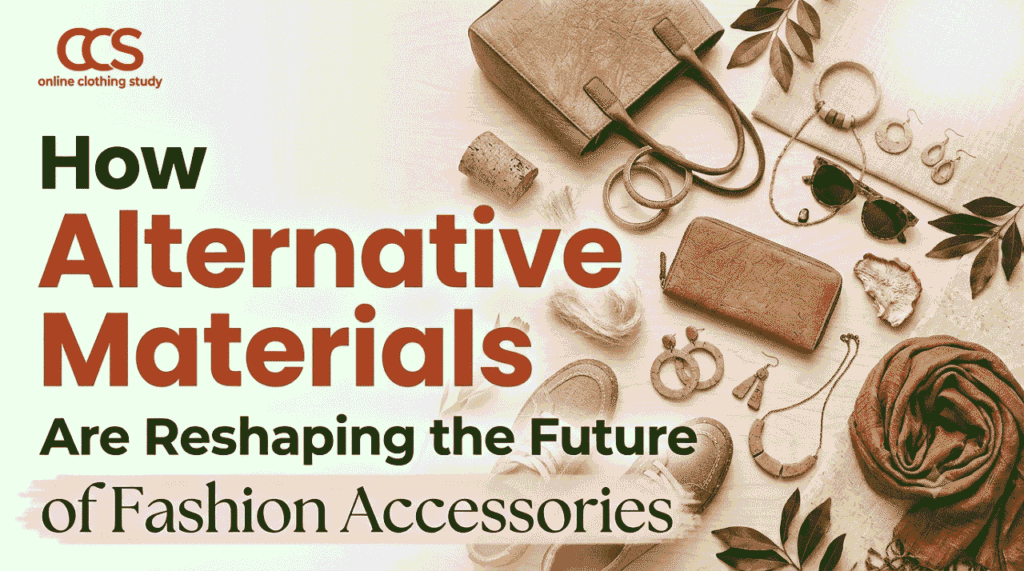
Bags, wallets, belts and other fashion accessories have traditionally relied on animal leather because it combines flexibility, strength and an attractive surface. Today, however, material developers are approaching those same functions in new ways. Microfiber structures, recycled textiles, agricultural by-products and bio-based coatings are expanding the range of animal-free options available to accessory designers.
The shift is not as simple as replacing leather with a single “vegan” or “plant-based” material. Each alternative has its own construction, performance, cost and end-of-life challenges. For manufacturers and brands, the important question is therefore not which material has the most appealing name, but which material system is suitable for the product and can support a long useful life.
“Vegan leather” is a category, not a specification
The term vegan leather describes what a material does not contain: animal-derived leather. It does not identify what the material is made from.
An animal-free leather alternative may be based on polyurethane (PU), a microfiber nonwoven, recycled polyester, natural rubber, cellulose, cork, agricultural residue or a combination of several components. A plant-derived surface may still use a textile backing, adhesive or protective coating made partly from synthetic polymers.
This is why the composition should be examined layer by layer. Most coated materials used for accessories contain some combination of:
- A backing or structural layer that gives the material strength and dimensional stability.
- A surface or coating that creates colour, texture and resistance to wear or moisture.
- Adhesives, binders and finishing chemicals that hold the layers together and influence performance.
These details matter more than a broad marketing term. Brands evaluating leather alternatives should request a technical data sheet and a clear composition breakdown instead of relying on the headline ingredient alone. Doshi’s guide to vegan leather and alternative materials, for example, explains the differences among ordinary PU, microfiber-based materials and several plant-derived options from an accessories perspective.
Microfiber materials: designed for performance
Microfiber-based leather alternatives use very fine synthetic fibres arranged into a dense, often nonwoven structure. A surface coating can then be applied to produce the desired colour, grain and finish.
The construction is important. Inexpensive coated fabrics may use a conventional woven or knitted backing with a relatively weak surface layer. Repeated flexing can eventually cause the coating to crack, separate or peel. A well-engineered microfiber base distributes stress differently and can provide better tear resistance, flexibility and shape retention.
For products such as briefcases, work bags, wallets and belts, this consistency is useful. Material thickness, surface appearance and colour can be controlled from batch to batch. The material can also be designed for abrasion resistance, water resistance and easy cleaning.
However, microfiber alternatives are usually partly or fully synthetic. Their durability may reduce the frequency of replacement, but their fossil-based content and limited recyclability remain concerns. Recycled feedstocks and bio-based polymer components may improve the material profile, although their exact percentage and traceability should be verified.
Plant-derived materials: promising, but often composite
Some of the most visible material innovations use residues from pineapple leaves, apples, grapes, cacti and other crops. They can create value from agricultural by-products and reduce reliance on animal inputs. They also give designers new textures and visual effects.
Yet “made with cactus” or “made from apples” does not necessarily mean that the finished sheet is entirely made from plants. Natural fibres or powders often need a backing and binder to become flexible, strong and suitable for industrial production. A protective coating may also be required to meet expectations for stain resistance and durability.
This does not make these materials inherently unsuitable. It simply means that plant content is one part of the assessment. A buyer should ask:
- What percentage of the total finished material is bio-based?
- Is that percentage measured by weight, carbon content or another method?
- What is used for the backing, binder and topcoat?
- Is the agricultural input a waste stream or a purpose-grown crop?
- Can the material be repaired, recycled or safely processed at the end of use?
Clear answers make meaningful comparison possible and reduce the risk of overstating environmental claims.
Cellulose, paper and cork bring different design possibilities
Cellulose-based materials can produce lightweight accessories with a distinctive hand feel. Washable kraft paper, for example, is made primarily from cellulose fibres and can become softer and more textured with use. It works well for certain totes, pouches and small accessories where low weight and a casual appearance are desirable.
Cork is harvested from the bark of cork oak trees and is valued for its natural texture, low weight and resistance to moisture. For use in accessories, a thin cork layer is normally laminated to a fabric backing. Its performance therefore depends on the complete composite, not only on the cork surface.
These materials do not need to imitate animal leather perfectly to be successful. Their greatest potential may lie in products designed around their own properties rather than products that force them to behave exactly like a different material.
Mycelium and other next-generation materials
Mycelium—the root-like network of fungi—has attracted attention as a possible basis for leather-like sheets. Other developers are working with bacterial cellulose, natural rubber, fermentation-derived ingredients and plastic-free plant composites.
These technologies could reduce dependence on both animal hides and virgin fossil resources. The main challenge is moving from an impressive prototype to a dependable commercial material. Accessories require a combination of flex resistance, abrasion resistance, colourfastness, tear strength, consistent thickness and acceptable cost. Suppliers must also be able to provide stable quality at the volumes and lead times required by manufacturers.
As production expands, some next-generation materials may become more accessible. Until then, limited capacity, high minimum order quantities and premium prices can restrict their use to selected collections or smaller product panels.
Durability must be tested at product level
A material swatch can look convincing in a showroom and still fail once it becomes a finished bag or wallet. Accessory materials experience concentrated stress at folds, corners, handles, belt holes, zipper openings and stitched seams.
Testing should reflect the intended application. Useful assessments can include:
- Abrasion resistance for surfaces exposed to desks, floors and clothing.
- Flex testing for wallets, straps and frequently opened sections.
- Tear and tensile strength for load-bearing panels.
- Seam strength and stitch-hole resistance.
- Colourfastness to rubbing, perspiration and water.
- Resistance to hydrolysis, heat, humidity and cold.
- Adhesion testing for coated or laminated layers.
The construction of the finished item is equally important. Reinforcement, edge finishing, thread choice, stitch density, hardware quality and stress-point design can determine whether a product lasts. A strong outer material cannot compensate for a weak handle attachment or poor zipper.
Sourcing requires more transparency
Alternative materials can make supply chains more complex because a single sheet may combine inputs from agriculture, textile production and polymer chemistry. Brands need information beyond a supplier’s marketing brochure.
A useful sourcing file should include:
- Full material composition, including backing and coating.
- Recycled or bio-based content and the method used to calculate it.
- Country of origin for the main processing stages.
- Restricted-substance and chemical-compliance documentation.
- Relevant physical test results.
- Information about water, energy and solvent management.
- Traceability or certification evidence for claimed inputs.
- Guidance for cutting, stitching, bonding, care and storage.
Claims should be specific. “Contains 30% recycled polyester” is more informative than “eco-friendly.” “Uses fibre recovered from pineapple-leaf waste” is clearer than “made from pineapple.” Precise language allows product developers and customers to understand both the achievement and the limitations.
Product longevity remains one of the most practical goals
No material should be evaluated in isolation from how the product will be used. A lower-impact input offers limited value if a bag fails quickly and must be replaced. Conversely, durability alone does not resolve concerns about fossil resources, chemical use or end-of-life waste.
The best decisions balance several factors: animal welfare, resource inputs, manufacturing impacts, performance, repairability and expected lifespan. For everyday accessories, designers can support longevity by using replaceable straps, accessible hardware, reinforced stress points and constructions that allow repair. Care instructions should explain how to clean and store the material without damaging its finish.
Brands can also reduce waste before a product reaches the customer. Accurate material specifications, prototype wear trials and early testing help prevent failures after full production. Pattern efficiency and thoughtful panel placement can reduce cutting waste, particularly when innovative materials are expensive or available only in limited quantities.
The future is likely to be a portfolio of materials
There may never be one universal replacement for animal leather. A structured work bag, a flexible wallet, a dress belt and a lightweight tote place different demands on a material. The most effective solution for each product may therefore be different.
Microfiber can provide reliable performance where strength and repeated flexing are priorities. Recycled textiles can make sense for linings and functional panels. Cellulose and cork can offer lightweight, distinctive surfaces. Agricultural-residue and mycelium-based materials can introduce new design possibilities as their performance, availability and cost improve.
The real change in fashion accessories is not the arrival of a single miracle material. It is the move toward more deliberate material selection. Manufacturers and brands now have a wider toolkit, but they also have a greater responsibility to examine composition, test performance and communicate claims accurately.
When innovation is combined with sound product engineering, alternative materials can do more than replace an animal-derived input. They can encourage the industry to design accessories around transparency, durability and a more efficient use of resources.
References:
- Textile Exchange, The Future of Synthetics and materials resources: https://textileexchange.org/knowledge-center/reports/the-future-of-synthetics/
- Textile Exchange, Materials Market Report 2025: https://textileexchange.org/knowledge-center/reports/materials-market-report-2025/
- Material Innovation Initiative, reports on next-generation materials: https://materialinnovation.org/reports/


Leave a Reply