

In this post, we will discuss the difference between Poplin and Cambric fabrics in terms of their construction, end use, and more.
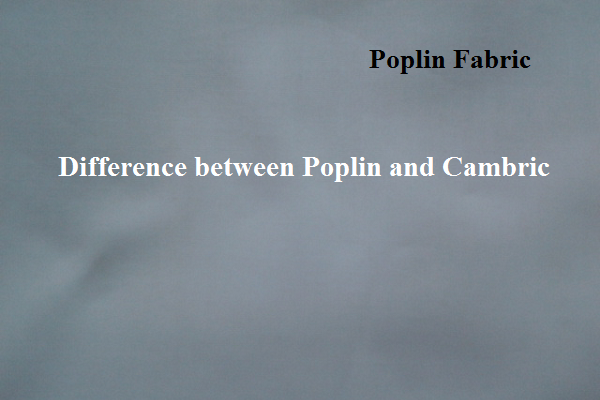
In Poplin, a high warp density is used compared to the weft. For example, fabric EPI and PPI are like 122×64, 136×72. Fabric with crosswise ribs that typically gives a corded surface.
Cambric is a square structure fabric. Like the construction of 60×60, 76×76. Finer yarns are used in cambric compared to Poplin. Lightweight but very dense fabric, shiny surface on one side.
Definition of Poplin and Cambric fabric:
Poplin, a strong fabric produced by the rib variation of the plain weave and characterized by fine, closely spaced, crosswise ribs. It is made with heavier filling yarns and a greater number of warp yarns and is similar to broadcloth, which has even finer, more closely spaced ribs.
Cambric, a lightweight, closely woven, plain cotton cloth first made in Cambrai, France, and originally a fine linen fabric.
Count and construction of Poplin and Cambric:
Cambric: Two examples of fabric construction in cambric
- 132 X 108 / 60 X 60
- 92 X 88 / 60 X 60
Poplin: Two examples of poplin construction
- 124 X 72 / 40 X 40
- 132 X 72 / 40 X 40
Also see: How to read fabric construction
The end use and application of poplin and cambric fabrics
Poplin: It is used for shirts, pajamas, women’s wear, and sportswear and also as a decorative fabric.
Cambric: Cambric is ideal for handkerchiefs, children’s dresses, slips, underwear, and nightgowns.
Source:
Britannica.com
http://mytextilenotes.blogspot.in/2009/12/count-construction-and-width-of-common.html
Rajkumar Rai









Leave a Reply