

Abstract
The Indian retail industry is one of the most dynamic and fast-growing sectors globally. Visual merchandising plays a critical role in attracting store traffic, driving sales, and building a competitive advantage in a crowded market. A key driver of this strategy is impulse buying, which activates immediate consumer desire through engaging and persuasive product presentation.
This study examines the correlation between visual merchandising and consumer impulse buying behavior across retail stores in the Coimbatore region of Tamil Nadu, India. Using statistical analysis, we evaluate the strength and significance of the relationship between key visual merchandising elements—window displays, store interiors, mannequin displays, and promotional signage—and consumer purchasing decisions.
The findings reveal a strong positive correlation across all four visual merchandising dimensions and consumer impulse buying behavior. Among the evaluated factors, store interior design exhibits the highest positive correlation, highlighting its pivotal role in shaping customer perception and driving unplanned retail purchases.
Keywords: Store Interior, Signage, Visual Merchandising, Impulse Buying, Cronbach’s Alpha, Pearson Correlation
Introduction
Visual merchandising is the art and science of presenting products in the most visually appealing way, emphasizing on the communication with the customers through images and presentations.[ Hyunjoo Oh, JennyPetrie, 2012]. Visual Merchandising is a technique commonly and rightly called “Silent Salesman” and is widely used in market to increase footfalls and attract shoppers and make shopping a pleasant experience to one and all [ Kaur Amandeep, 2013].
Visual merchandising is: ‘one of the visible, systematic, logical and intelligent ways of putting stock on the floor’. Visual Merchandising is offered to the customer from exterior of the store to interior of the store. Visual merchandising is a tool to increase sales and influences customer decision to buy the products [ Rao Rama, Mopidevi, Lolla Sree Rama, 2013].
Visual merchandising display is the presentation of merchandise at its finest. Display is the glamour, the spark, the stage, the oomph and sparkle that surrounds a store and makes the consumers stop, look, and buys what has been placed together with care and presented with skill. Visual merchandising displays use creative techniques in order to save both the sales person’s and the shopper’s time by making shopping effortless [ Yolande Hefer & Michael.C.Cant, 2013]. According to research conducted by Marta Gigola [Marta Gigola, 2013] visual merchandising motivates more efficiently
- Women(91%) than men(13%) to buy apparel
- Younger people(90%) than elder(48%) to buy apparel
- Individuals with higher incomes(100%) than those with lower incomes(25%) to buy apparel [ Marta Gigola, 2013].
Functions of Visual Merchandising
Visual merchandising helps in :
- Educating the customers about the product/ service in an effective and creative way.
- Establishing a creative medium to present merchandise in 3D environment, thereby enabling long lasting impact and recall value.
- Setting the company apart in an exclusive position.
- Establishing linkage between fashions, product design and marketing by keeping the product in prime focus.
- Combining the creative, technical and operational aspects of a product and the business.
- Drawing the attention of the customer to enable him to take purchase decision within shortest possible time, and thus augmenting the selling process.
- Make it easier for the customer to locate the desired category and merchandise.
- Make it easier for the customer to self-select.
- Make it possible for the shopper to co-ordinate and accessorize.
- Recommend, highlight and demonstrate particular products at strategic locations.[ Gudonaviciene Rasa & Alijosiene Sonata, 2015]
Visual Merchandising Impact – A Multi Stage Process
The impact of visual merchandising is a multi stage process. It is the one which affects the growth of motivation to buy the apparel. The first stage of the process includes noticing the apparel. Here the key role is played by sight. The second stage is the creation of the definite consumer’s attitude towards the specific apparel. The third stage is the desire to buy the apparel. The last stage of the process is the purchase of the apparel which finally meets the consumer needs [Marta Gigola, 2013].
Techniques in visual merchandising
Visual merchandising consists of mainly two techniques; interior and exterior displays, also known as in-store design and window displays. The goal of these two techniques is to attract the attention of consumers, entice them into the store, to keep them in the store as long as possible, and influence purchasing decisions.
Interior Displays
In-store visual merchandising can be used to capture the attention of consumers whilst they are in the store, which is essential in the buying decision-making process. To capture the attention of the customer, the retailer must consider the customer’s needs during this process.Factors that contribute to the overall in-store design include; the store layout, store design, point of purchases displays, item display, assortment display, and signage [https://en.wikipedia.org/wiki/Visual_merchandising (accessed on 26.12.2016)].
Store Interior
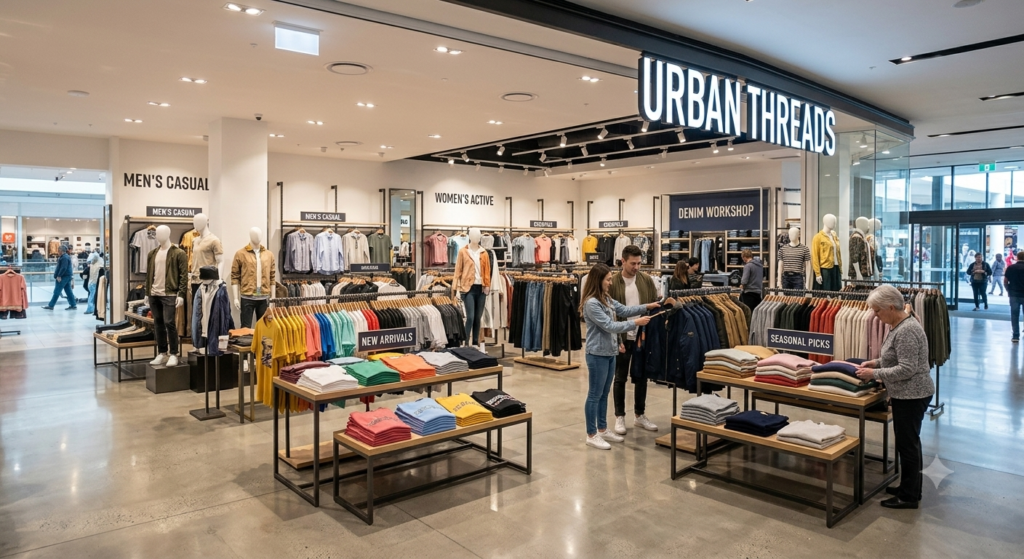
Shop interior is a significant part of merchandising because designing a modern retail store can affect the profit and image of the brands. Designing a shop interior is the art of planning because it is a creative process. It is the art of drawing, composing and selecting colors, materials, furnishings and accessories to enrich the design of a store interior.
The main purpose is to create an attractive shopping environment and to enhance the presentation of merchandise. To create a distinctive image should be the main task of a designer because such an image will create a brand recognition which will be immediately perceived by the consumers. Today’s competitive retail environment, fashion retailers struggle in order to increase their sales and to carry their brands to the wider masses. The best way to achieve this purpose is to consider the architectural and interior design [Yolande Hefer & Michael.C.Cant, 2013].
Mannequins
The use of mannequins to exhibit merchandise is of great importance. The word “mannequin” comes from the Dutch word manneken, literally meaning ‘little man’. A mannequin is an assembled model of the human body used by retailers to demonstrate their products, especially to exhibit the draping of apparel. Mannequins help a retailer in many different ways. As and when a new fashion trend hits the market, they are the first ones to showcase it. It is through them, one gets to know about the latest collections of clothing that have arrived at a particular store.
Mannequins also give an appeal to the product while letting customers know how a particular piece of merchandise would look once worn. This helps them to procure a piece of merchandise quickly. According to the study conducted by Vinamra Jain, Ashok Sharma and Pradeep Narwal [Jain Vinamra, Sharma Ashok, Narwal Pradeep, January 2012], 45.33% of the women get an idea of what they should buy only after looking through the mannequin display and 45.33% of women rely on the mannequin display. Whenever they see a new style or design on mannequin display, they tend to buy it.
Point of Purchase Display
Merchandise must be visible, easy to access, and there must be a range of merchandise to choose from. Having visible merchandise is essential for retailers as consumers to not only “buy what they see” but are also able to tangibly engage with the physical product. This creates an emotional connection, which can drive the customer to purchase the product. Considering these elements, merchandising gives the customer a sense of freedom of choice. Arranging stock, so it is not overcrowded and limiting the amount of merchandise on the shop floor, is an important aspect of merchandising. Over-crowded stores can create a sense of stress and anxiety, which does not encourage the consumer to shop the entire store [https://en.wikipedia.org/wiki/Visual_merchandising (accessed on 26.12.2016)].
Atmospherics
The atmospherics also have a large influence on the store environment. Atmospherics should all coordinate with each other to create a consistent ambiance and positively influence the consumer’s shopping experience and buying decision-making process. Four dimensions of store atmosphere are visual (sight), aural (sound), olfactory (smell), and tactile (touch). Visuals such as light and display are not always enough to enhance the overall ambience of the store, and retain customer attention; therefore, other elements such as music and scents can be used [Laurent Hubrechts & Beyhan kokturk, 2012].
Lighting
Lighting is another element of visual merchandising. Lighting is essential in calling attention to merchandise in a display. A shopper’s eye is drawn automatically to the brightest item or area. Lighting treatment may be used to draw attention to the part of display area or to coordinate the parts of total display area. The choice of the right lighting in fashion stores should be well considered. There are numerous products that offer many choices for shopping environment. Lighting deals with create an ambiance and make environments visually pleasing. The cheapest and most effective starting place in getting attention and recognition is with good lighting [Yolande Hefer & Michael.C.Cant, 2013].
Good lighting can guide the customer’s eyes, reveal the color and cut of the merchandise, show the styling and tailoring details and emphasize the good qualities of the outfit, helping the merchandise to be pre-sold to customer [Gudonaviciene Rasa & Alijosiene Sonata, 2015]. The strategic use of light can change the mood of a consumer and affect their subconscious mind during their shopping experience within a retail store. A retail store with a soft ambiance and bright lights highlighting certain products will drive the customer towards these products and motivate them to make a purchase [https://en.wikipedia.org/wiki/Visual_merchandising (accessed on 26.12.2016)].
Exterior Display
Exterior window displays can be used to sell product and entice customers into the store. An eye-catching, innovative window display can promote the brand image. It can be used to advertise. Windows can give consumers and by-passers understanding as to what goods are sold in store. They are also an effective way of promoting fashion trends and providing useful information to the target audience [https://en.wikipedia.org/wiki/Visual_merchandising (accessed on 26.12.2016)].
Window Display
The display window is accepted as the most important part of the store design because it is the first meeting place the customer has with a brand and it gives passerby a quick impression of the store. A passerby can hold an opinion about the type of merchandise sold inside. The layout of the display windows should not take focus away from the clothes and it should suggest a feeling. Window displays are crucial whether a store is situated in a mall or in a busy street. They are mix of art, fashion, design and marketing. They must compel customers to enter a store by defining a brand’s image. Today, retailers are recognizing the importance of window display as the first point of contact between the store and the customer [Yolande Hefer & Michael.C.Cant, 2013].
Window displays are used as an initial attraction to bring customers into a store and are also used as a marketing tool to communicate the brand’s image to the consumers as well as to distinguish itself from its competitors [https://en.wikipedia.org/wiki/Visual_merchandising (accessed on 26.12.2016)]. Merchandise-focused displays convey concrete messages and thus facilitate an understanding of merchandise itself to influence shoppers’ store entry decisions. In contrast, artistic displays convey abstract messages to induce curiosity and further encou- rage exploration within the store. Successful implementation of such artistic window displays can grab shoppers’ attention, provoke their curiosity and interest, effectively communicate store/brand image, and further draw them into stores to purchase [http://www.simplypsychology.org/likert-scale.html accessed on (31.12.2016)].
Customers give three to five seconds of their attention to window display. The retailer’s visual message should be conveyed to the customer in that short period of time [Gudonaviciene Rasa & Alijosiene Sonata, 2015] The interpretations of the study conducted by Vinamra Jain, Ashok Sharma and Pradeep Narwal state that 42% of the women are attracted to eye catching window display and 44.67% of the women always pay attention to the different window display no matter what is being displayed [Soundariya S., Sathyan S, 2015].
Color
Pegler suggests that people buy color before they buy, size, fit, or price. Colors says something about the kind of merchandise and merchandiser [Yolande Hefer & Michael.C.Cant, 2013]. Color is one of the most powerful tools in the Visual Merchandising segment. It is a visual perceptual property. Colors can be associated with emotions, special occasions and gender. It attracts attention and pulls more customers into the store.
A retailer has to focus on the right choice of color that would match with the theme of display. It is not possible to satisfy everyone all the time, but it is possible to cultivate the taste of customers gradually and purposefully. A right choice of colors in the display items can turn walkers into stoppers and significantly convert them into customers.
A Halloween display would require black color in the display theme. Valentines theme should be ruled by red color supplemented with pink and white. A display of baby accessories should reflect light shades of pink and blue colors. A Christmas display should contain colors of red, green, gold and silver [Gudonaviciene Rasa & Alijosiene Sonata, 2015].
Graphics, Photography and Signage
The use of graphics and photography in window displays is an effective way of communicating information to the consumer. The most common form of communication in window displays is through text and signage, especially when advertising a sale or a special.This technique is commonly directed towards price driven customers who are constantly on the look out for bargains. Photography can be used in a window display to enhance the theme of window or reinforce the brand’s advertising campaigns [https://en.wikipedia.org/wiki/Visual_merchandising (accessed on 26.12.2016)]. For most businesses, the most cost effective and efficient form of advertising to potential customers is on-premise signage and is a business’s basic link to customers.
The purpose is to promote impulse “stop and shop,” to create awareness for the product or service for future reference, and to influence purchasing decisions once the customer has stopped. The objectives of Signage are explained as: 1. To assist customer in their flow across the store. 2. To lead the customers in newer sections opened in the store if any 3. Through Color and contrast, add to the visual ambience of the store [Yolande Hefer & Michael.C.Cant, 2013]. Signage is the “silent salesperson” for the retailer and must reflect the correct brand image. Proper signage has been shown to increase the sale of an item by over 40% [Gudonaviciene Rasa & Alijosiene Sonata, 2015]. There are various types of signage. For instance:
- ‘Promotional’ signage which informs the customer about off price events or schemes
- ‘Location’ signage which directs the buyer to specific departments or merchandise;
- ‘Institutional’ signage which gives information on store policies, charitable events, etc., and
- ‘Informational’ signage provides product related information like special features, benefits, sizes, price, etc.[ Gudonaviciene Rasa & Alijosiene Sonata, 2015]
Seasonal Displays
Adjusting window displays based on seasonal events, calendar dates, and consumerism-based holidays such as Christmas, Valentine’s Day, and Father’s Day can be a useful approach to encourage consumer purchasing. Choosing products that suit the season to display in the window can remind consumers to purchase gifts and provide gift ideas for the particular holiday [https://en.wikipedia.org/wiki/Visual_merchandising (accessed on 26.12.2016)].
Customer Buying Process
Visual merchandising has a great role by converting passerby to spenders and ultimately converting them to loyal customers. According to customer stickiness progression model loyal shoppers will become spenders who contribute more to the profit of the organization [Soundariya S., Sathyan S, 2015]. Stopping Power – If displays are built with full of familiar items , the chances are that the customers will not stop and have a look. The familiar products must be displayed with the unfamiliar, not only will they stop and look, the chances are they are more likely to purchase the familiar items.[ Jain Vinamra, Sharma Ashok, Narwal Pradeep, January 2012].
Consumer Behaviour
Consumer behaviour can be defined as the study of individuals, groups or organisations and the processes they use to select, secure, use and dispose of products, services, experiences, or ideas to satisfy needs and the impact that these processes have on the consumer and society. Consumer behaviour also includes the consumers’ expressive, psychological and social responses that lead, establish or follow these responses [Yolande Hefer & Michael.C.Cant, 2013]. A typical consumer behaviour model is depicted in Figure 1.
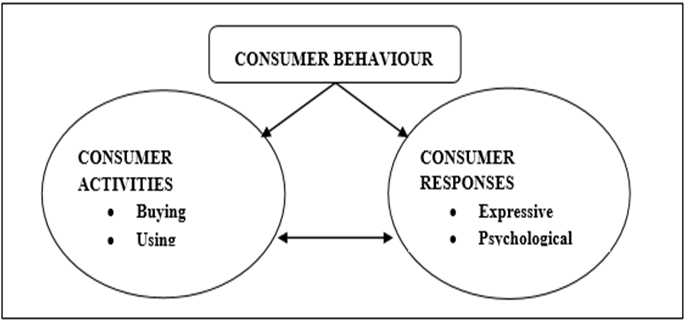
Figure 1 – Consumer Behaviour
Sources : Adapted from Kardes, F. R., Cline, T. W. & Cronley, M. L. (2011). Consumer Behaviour: Science And Practice. China: South-Western, p.8.
The figure indicates that consumer behaviour consists of consumer activities and consumer responses, that both influence each other. Therefore, a consumer’s expressive, psychological and social responses will have an influence on their buying, using and disposing activities, and vice versa. An expressive response reveals a consumer’s passions, feelings and their frame of mind. The psychological responses consists of a consumer’s thought processes, judgments, attitudes and values and could include a consumer’s feeling toward a specific apparel retail store [Yolande Hefer & Michael.C.Cant, 2013].
Impulse Buying
Impulse buying refers to unplanned, sudden buying behaviour, which is often accompanied by feeling of excitement and pleasure and/or a powerful urge to buy [Gudonaviciene Rasa & Alijosiene Sonata, 2015]. “All impulse buying is at least unplanned, but all unplanned purchases are not necessarily decided impulsively.” [Laurent Hubrechts & Beyhan kokturk, 2012]. Surveys have shown that impulse buying makes up 27-62 per cent of the total buying at shopping centers [Gudonaviciene Rasa & Alijosiene Sonata, 2015]. Impulse buying is subdivided into four categories :
- Pure impulsive buying – Refers to a purchase that cannot be categorized in the planned purchasing at all. This is purely spontaneous way to buy is strongly linked to emotional factors.
- Suggestion impulsive buying – Which is a need triggered by the encountering of a new product for the first time, that can only be fulfilled by getting it.
- Reminder impulsive buying – i.e. a item that remembers the consumer he/she needs it as soon as he/she sees it. Unlike suggestion impulsive buying, the consumer has knowledge about the product when it comes to reminder impulsive buying, but it is still considered as an impulse purchase.
- Planned impulsive buying – This paradoxical category can be explained by the fact that when the impulsive buyer goes into a store with intention to buy a specific item. e.g. clothes, but the choice about the specific item, brand, size and price hasn’t been decided before. The purchasing decision is made at the point of sale.
This last category can be seen as the boundary between planned and unplanned buying [Laurent Hubrechts & Beyhan kokturk, 2012]. The purchasing process starts with need recognition – the buyer recognizes a need. This recognized need can be triggered by internal or external stimuli. Once the need is identified, consumer will start seeking for information. At this level, consumer will process the information and may take the buying process to the next level, which is the purchase decision. Finally, he will assess his satisfaction or dissatisfaction toward the purchased product. This final step is crucial for the store because a satisfied customer may develop loyalty towards the store where he bought the item. The process will start over, as the consumer needs another product [Laurent Hubrechts & Beyhan kokturk, 2012].
No systematic study is reported on the impact of visual merchandising on impulse buying behavior of consumer in Coimbatore region in India. Thus, we thought worthwhile to investigate the impact of visual merchandising on impulse buying behavior of consumer in Coimbatore region in India, relationship between the impulse buying behaviour (Dependent variable) and each of the four visual merchandising techniques i.e. window displays, store interior, mannequin display and signage (Independent Variables) and the factor among the four techniques greatly influences the consumers impulse buying behaviour.
This article is part of a research paper.







Leave a Reply