

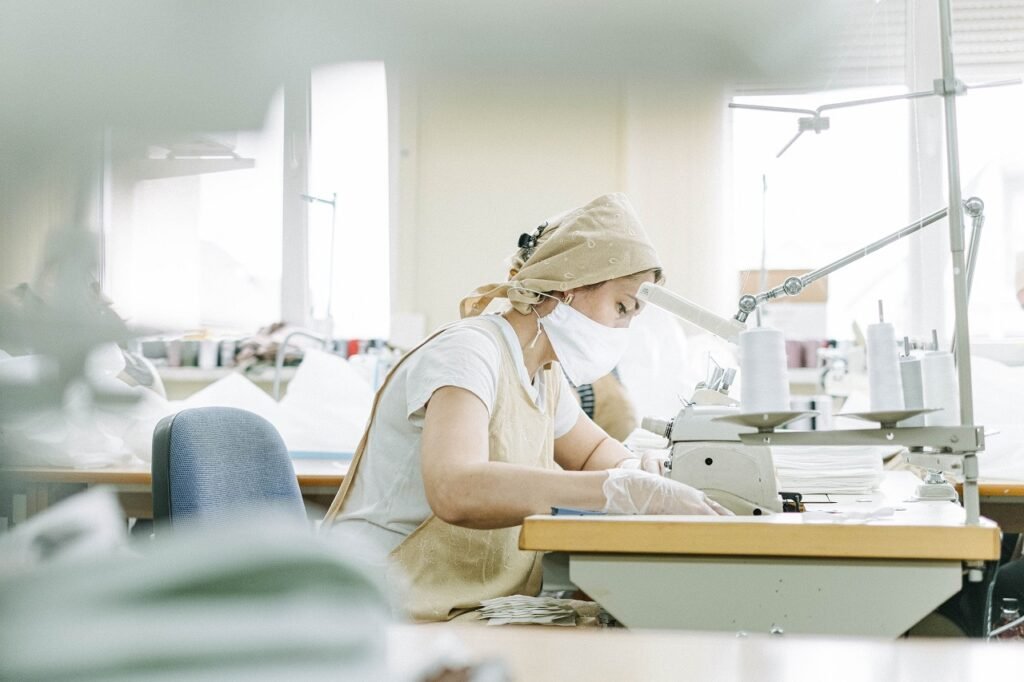
The successful software implementation in garment factory, does not begin with software configuration or system installation. It begins with understanding the factory. Every manufacturing facility has its own way of working. Product types, production capacity, number of lines, manpower, quality checkpoints, reporting methods, ERP systems, and even small shop-floor practices can be different from one factory to another.
This is why a Pre-Implementation Workshop is an important part of any manufacturing implementation journey. From my practical experience, I see this workshop as a bridge between understanding the factory’s current operations and preparing a solution that can actually work in the real manufacturing environment.
It is not simply a meeting or a training session. It is a structured, on-floor study of the factory’s processes, people, production flow, quality practices, technology requirements, and operational challenges.
After reading this article check out the part-II of this series: From Shop Floor Observation to Implementation: Turning Workshop Findings into a Production-Ready Solution
Preparation Before the Factory Visit for the Software Implementation
Before travelling to the factory, we first collect some basic information about the manufacturing facility.
- This initial data normally includes the factory location, product type, number of production lines, daily production capacity, manpower, factory efficiency, line efficiency, DHU, and quality control resources. The factory data collection guide also includes planned and actual factory and line efficiency, DHU, and the availability of end of line and roving quality control resources.
- This initial information gives us a basic understanding of the factory before we start the detailed workshop.
- Once the basic information is available, we plan the practical requirements such as travel, visa where required, tickets, accommodation, workshop dates, and coordination with the factory management and project team.
This preparation may look simple, but it is important because a well-planned visit allows the team to spend more time understanding the actual manufacturing process.
Pre-Implementation Workshop
A Pre-Implementation Workshop is an offline, on-floor manufacturing workshop conducted before the actual implementation begins.
- The objective is to meet the factory management and operational teams, understand every important part of the current process, identify improvement opportunities, and align the factory’s working process with the proposed solution.
- During the workshop, we do not depend only on documents or presentations. We go to the shop floor and observe how the process is actually happening.
- This is important because what is written in a process document and what happens on the production floor can sometimes be different.
A typical workshop takes around three to five days, depending on the size and complexity of the factory. A smaller factory may require less time, while a larger manufacturing facility with more lines, departments, and processes may require additional time.
Starting With the Factory and Project Team
The workshop generally begins with an introduction and alignment between the implementation team and the factory team.
- We identify the people who need to be involved from the factory side and understand their responsibilities. Depending on the scope, this can involve factory management, production, quality, cutting, sewing, packing, IT, ERP, and other relevant teams.
- This alignment is important because every department has a different view of the manufacturing process.
- The production team understands the operational flow, the quality team understands inspection and defect-related activities, and the IT or ERP team understands the existing digital environment and system architecture.
Bringing these perspectives together gives a much more complete picture of the factory.
Product Walkthrough and Shop-Floor Visit
After the initial discussion, we go through the product and its manufacturing journey.
We try to understand how the product moves through different stages and where the important production and quality activities take place.
The shop-floor visit is one of the most important parts of the workshop.
Instead of only discussing how the process should work, we observe how it actually works. We follow the movement of the order, production activities, tracking points, quality checkpoints, operator activities, reporting practices, and other important processes.
This is where practical experience becomes very important.
A process may look straightforward during a discussion, but once you walk through the factory, you may find additional checkpoints, rework activities, approvals, manual tracking, or other operational practices that were not visible earlier.
Understanding Order Flow and Process Flow
Another important part of the workshop is reviewing the order flow structure.
- We need to understand where an order starts, how it moves between departments, what information is captured at each stage, and where production and quality information is generated.
- From there, we study the detailed process flow and identify important tracking points.
- The objective is not just to draw a process diagram. We need to understand what is happening at each stage and how that information can be captured and connected with the system.
For example, we may need to understand where production starts, where quantities are recorded, where quality inspection takes place, where defects are identified, how rework is handled, and when the production status changes.
Reviewing Production and Quality Checkpoints
Production and quality are closely connected in garment manufacturing, so checkpoint review is an important part of the workshop.
- Depending on the factory process, we may review checkpoints such as CPI, TLS or Roving QC, End-Line QC, and other factory-specific quality activities.
- The initial factory data collection also considers quality resources such as end-line and roving QC.
- But simply knowing that a checkpoint exists is not enough.
- We need to understand who performs the inspection, at which stage it is performed, what information is captured, how defects are handled, and how the information moves to the next process.
This helps us understand the real relationship between production and quality on the shop floor.
Reviewing Existing Reports and Data
During the workshop, we also review the factory’s existing production and quality reports.
- These reports can provide useful information about production quantity, efficiency, quality performance, DHU, line performance, inspection results, and production status.
- The initial data collection process specifically captures planned and actual factory efficiency, line efficiency, and DHU information.
By looking at the existing reports, we can understand how the factory currently measures its performance and what information is important for management and operational teams.
ERP, Hardware and Integration Requirements
A factory may already have an ERP system or other digital tools, so integration requirements also need to be discussed during the workshop.
- We need to understand what information already exists, which systems are being used, what information needs to move between systems, and where integration may be required.
- Hardware is another important consideration.
- A solution may work perfectly from a software perspective, but if the required hardware or infrastructure is not suitable for the shop-floor environment, implementation can become difficult.
That is why hardware discussions should happen while studying the actual factory process.
Aligning the Factory Process With the Solution
After understanding the factory process, we can start looking at how the proposed solution fits into the existing workflow.
- Sometimes the factory process already matches the available functionality.
- Sometimes the process is supported but requires configuration.
- And sometimes the factory has a specific process that is not currently available in the solution.
In such cases, the requirement needs to be studied carefully. If the process is important to the factory’s operation, it may need to be adapted or developed so that it is ready before implementation starts.
This is one of the most valuable outcomes of the workshop because it helps identify gaps before software implementation rather than after the system has already gone live.
What the Shop Floor Teaches Us
One of the biggest lessons I have learned from these workshops is the difference between theoretical understanding and practical implementation.
- A textbook or process document may describe a standard flow, but the real factory environment can be much more detailed.
- There may be production priorities, quality decisions, manual activities, rework, operator-level practices, or factory-specific processes that are not visible from a high-level process diagram.
- This does not mean that the theoretical process is wrong. Theory provides the foundation, but the shop floor provides the practical reality.
For a successful system implementation, both need to be understood.
Final Feedback and Workshop Documentation
At the end of the workshop, we conduct a final feedback and discussion session with the factory team.
- This gives everyone an opportunity to confirm what has been understood, discuss any remaining questions, identify gaps, and make sure that important requirements have not been missed.
- After the final discussion, we prepare a detailed workshop process document covering the understanding and requirements identified during the visit.
- This document is shared with the relevant stakeholders and management to maintain transparency and create a common reference for the next stage of the project.
- Once the final discussion is completed, the workshop is formally closed, and the team leaves the factory location.
However, the work does not end there.
The physical workshop is complete, but the Pre-Implementation phase continues with process documentation, configuration planning, integration discussions, development requirements, and other activities needed to prepare for implementation.
Why This Workshop Matters
For me, the biggest value of a Pre-Implementation Workshop is that it allows the implementation team to understand the factory before making implementation decisions.
It helps identify process gaps early, improve communication between teams, understand real shop-floor practices, and prepare the solution according to actual manufacturing requirements.
The additional modules identified in the factory data collection process also show how detailed this understanding needs to be, covering activities across cutting, sewing, washing, packing, and pre-shipment inspection.
Conclusion
A successful manufacturing implementation starts with understanding, observation, and communication.
- The Pre-Implementation Workshop brings together factory knowledge, production experience, quality requirements, technology, data, and real shop-floor practices.
- From my experience, the most important lesson is simple: do not assume that every factory works the same way.
- Before implementing a solution, first understand the factory, walk through the process, speak with the people who operate it, identify the gaps, and document what you have learned.
That is what makes a Pre-Implementation Workshop more than just a factory visit. It becomes the foundation for connecting theoretical knowledge with practical garment manufacturing experience and preparing for a more effective implementation.








Leave a Reply